
Sasha DiGiulian Conquers El Cap’s Platinum Wall
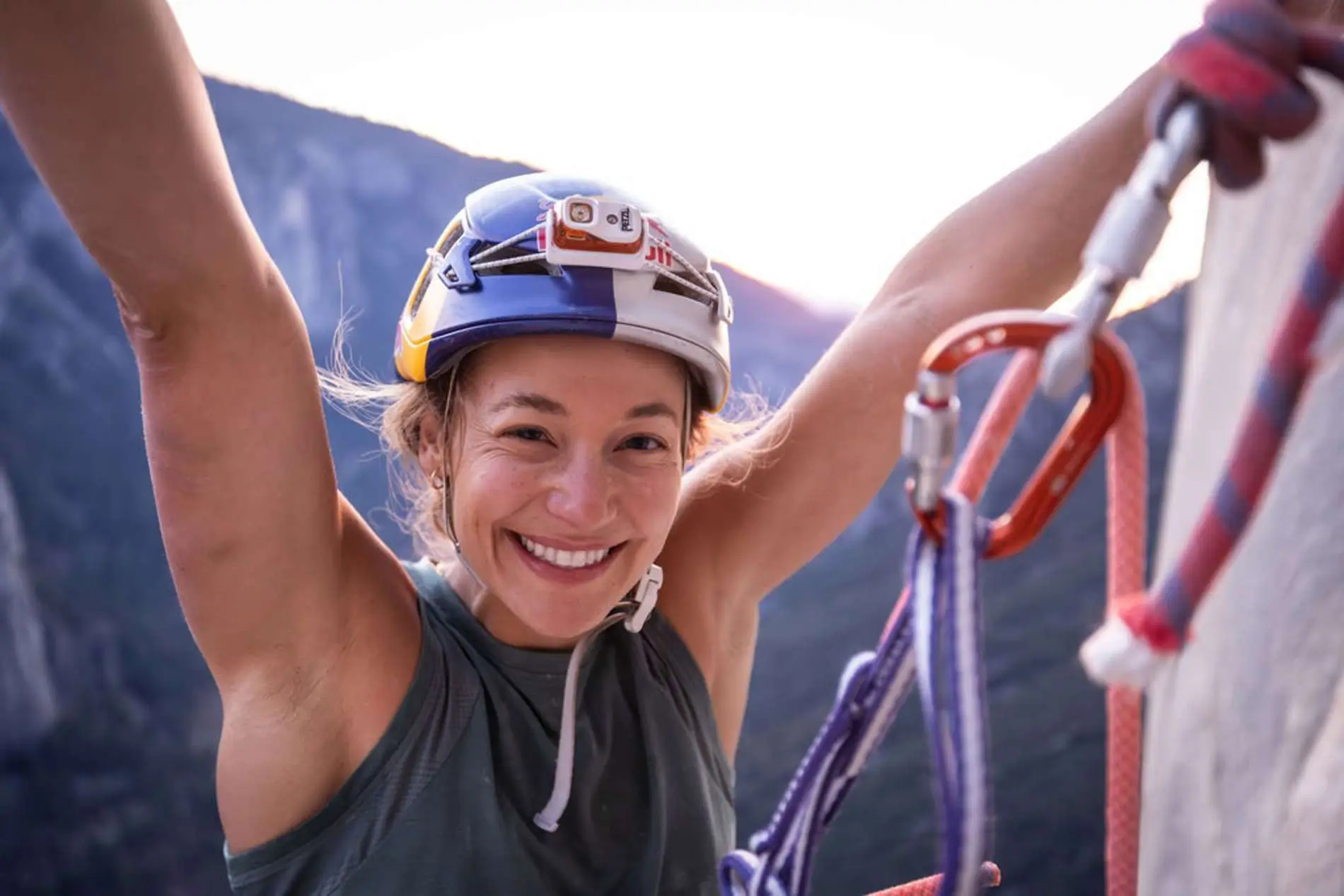
Photo: © Pablo Durana/Red Bull
For most climbers, El Capitan is already a lifetime dream – a nearly kilometre-high cathedral of granite, famous for its exposure, storms, and the razor-sharp line between ambition and danger. But the route Sasha DiGiulian chose was not just any line on the wall. It was the longest route on El Cap: the 39-pitch Platinum Wall, a direct, unforgiving sweep of face climbing and small edges that few have ever dared to attempt.
On November 26, after 23 days of storms, fear, exhaustion, and unrelenting focus, DiGiulian stood on the summit – becoming the first woman to free-climb the entire Platinum Wall. Her route totaled 40 pitches, thanks to a direct start via Pine Line, and she led 27 of them, including every crux.
“It’s the proudest climb of my career. I can’t believe it,” she wrote in a message sent from the top, fingers swollen and taped, after the longest continuous climb of her life.
This is the story behind that ascent – the preparation, the storm, the waiting, and the moment she decided she would not give up.
Three seasons of preparation
The Platinum Wall is not a route that yields easily. It’s a line that avoids obvious crack systems and instead forces climbers into sustained, technical face climbing. Its hardest pitches fall in the 5.12 to 5.13 range, with one pitch demanding a long jump between stemming positions.
Before this push, DiGiulian had spent three seasons working the climb, rehearsing the first two-thirds of the route multiple times with partner Elliot Faber. The final third remained largely unknown – a span of unclimbed territory she would encounter only on the live attempt.
On November 2, after weeks of planning and gear sorting, they committed to the ground-up push.
The rhythm of the wall
For the first days, the team moved smoothly. DiGiulian led the majority of the pitches, often topping out on sections of runout face climbing protected by bolts placed on blank granite. The route demanded full attention: tiny crimps, thin foot smears, long underclings, sections of steep roofs, and finally the stemming corner where the infamous jump awaited.
The plan was simple: climb a few pitches each day, stay steady, protect energy, and reach the upper headwall before the forecasted shift in weather.
Of course, El Capitan had its own plans.
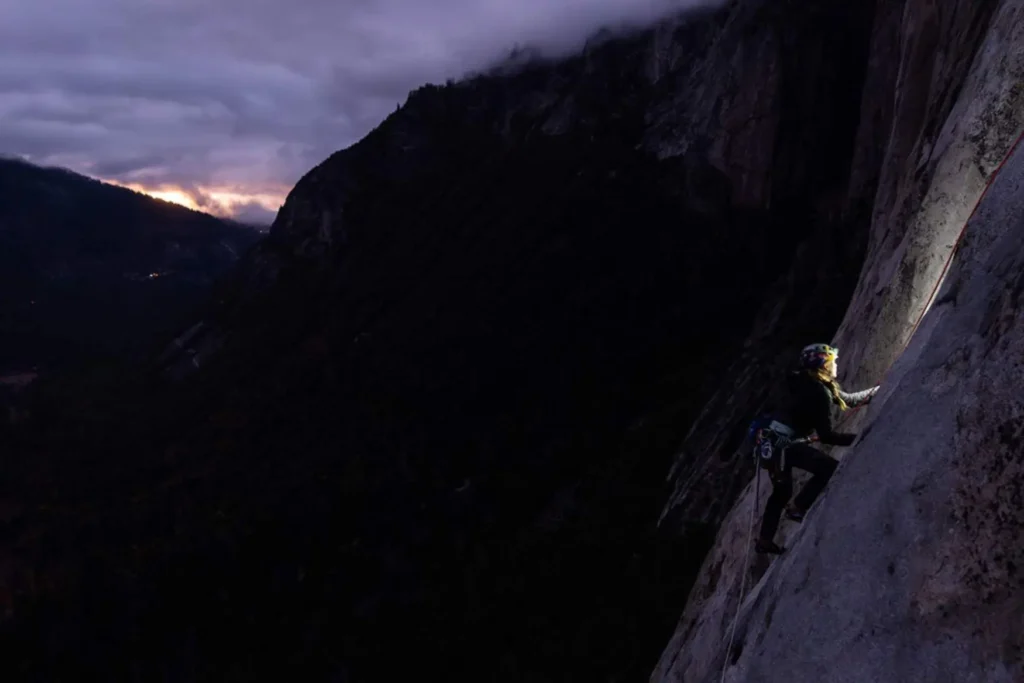
Photo: © Pablo Durana/Red Bull
The storm that almost ended everything
Nine days into the climb, at roughly 2,600 feet off the ground, the clouds rolled in.
What arrived was a full Sierra storm – snow, rain, cold winds, and ice pellets hammering the wall. Slick water streamed down the granite like melting glass. Conditions were too dangerous to move, so Sasha and Elliot retreated into their portaledges.
They would remain there for nine days.
Clothes soaked. Rock freezing. Condensation dripping from the fabric above their heads. Every morning they woke up cold; every evening they tried to dry their gear with body heat. They rationed freeze-dried food, kept their spirits up by talking, and sent occasional updates from the wall.
Messages of support arrived from friends – even from fellow Yosemite icons Alex Honnold and Tommy Caldwell, who had completed the route earlier that year.
But morale was not the problem. Time was. Water was seeping into cracks, temperatures were low, and the window to complete the climb was narrowing.
Still – they waited.
A break in the clouds, a decision to continue
When the weather finally calmed, the wall was still wet, with patches of ice melting directly above them. The safer decision would have been to rappel off and try again next year.
But DiGiulian made another choice.
She tied in. Hands stiff from cold. Taped knuckles. Soaked granite beneath her feet.
The next days were slow but upward. Pitch by pitch, she led past wet corners, damp roof sections, and frictionless blank walls. Every move demanded caution; every sequence was a balance between technique and managing the fear of slipping.
Then – another unexpected shift.
A moment of uncertainty: partner departure
As they entered the final stretch of the route, Faber received news of a family emergency and had to descend. It was a sudden emotional blow – after weeks of effort together, his part of the journey had to end.
But he encouraged her to continue, to finish what they had started.
Two days later, DiGiulian teamed up with a friend who jumared up to provide belay support. It wasn’t the partnership she began with – but the commitment to the ascent stayed intact.
The final pitches
The upper section of the Platinum Wall is everything a climber both dreams of and fears: long, pumpy sequences, tiny holds, exhausting corners, and a final push where mental strength becomes the real rope.
Pitch after pitch, she moved upward:
- undercling roofs, where every move required full-body tension
- steep face sections, protected by distant bolts
- the long stemming corner, ending with the jump she had rehearsed on previous seasons
- the exit cracks, dripping but climbable
And then – after weeks of waiting, storms, and the heaviest emotional weight she’d ever carried on a climb – the granite eased off.
The light widened. The rope paid out.
And she topped out.
A rare ascent – and a historic one
Before DiGiulian, only three teams had completed the Platinum Wall:
1. The original first ascent team
2. A German duo in 2018
3. A team including Alex Honnold and Tommy Caldwell in 2025
Hers is the fourth ascension in history – and the first-ever female free ascent.
She led 27 of the 40 pitches, including every major crux.
After 23 days on the wall, she summited with tears, disbelief, and the kind of pride that comes not from glory, but from endurance.
Sasha DiGiulian already holds more than 30 First Female Ascents worldwide, multiple 5.14 routes, and a long list of global accomplishments. But this climb – the sheer length, the ferocity of the storm, the nine days trapped above the world, the choice to continue despite all signs pointing toward retreat – is a defining chapter.
It is the kind of climb that rewrites limits, reshapes identity, and becomes a marker of what is possible in big-wall climbing.
And for DiGiulian, it may be the ascent she is remembered for most.
“It’s the proudest climb of my career.”
It’s hard to imagine a more fitting description.
Source: redbull.com

Share this post:



Comments