
K2 1954: Glory, Betrayal, and the Cost of Truth
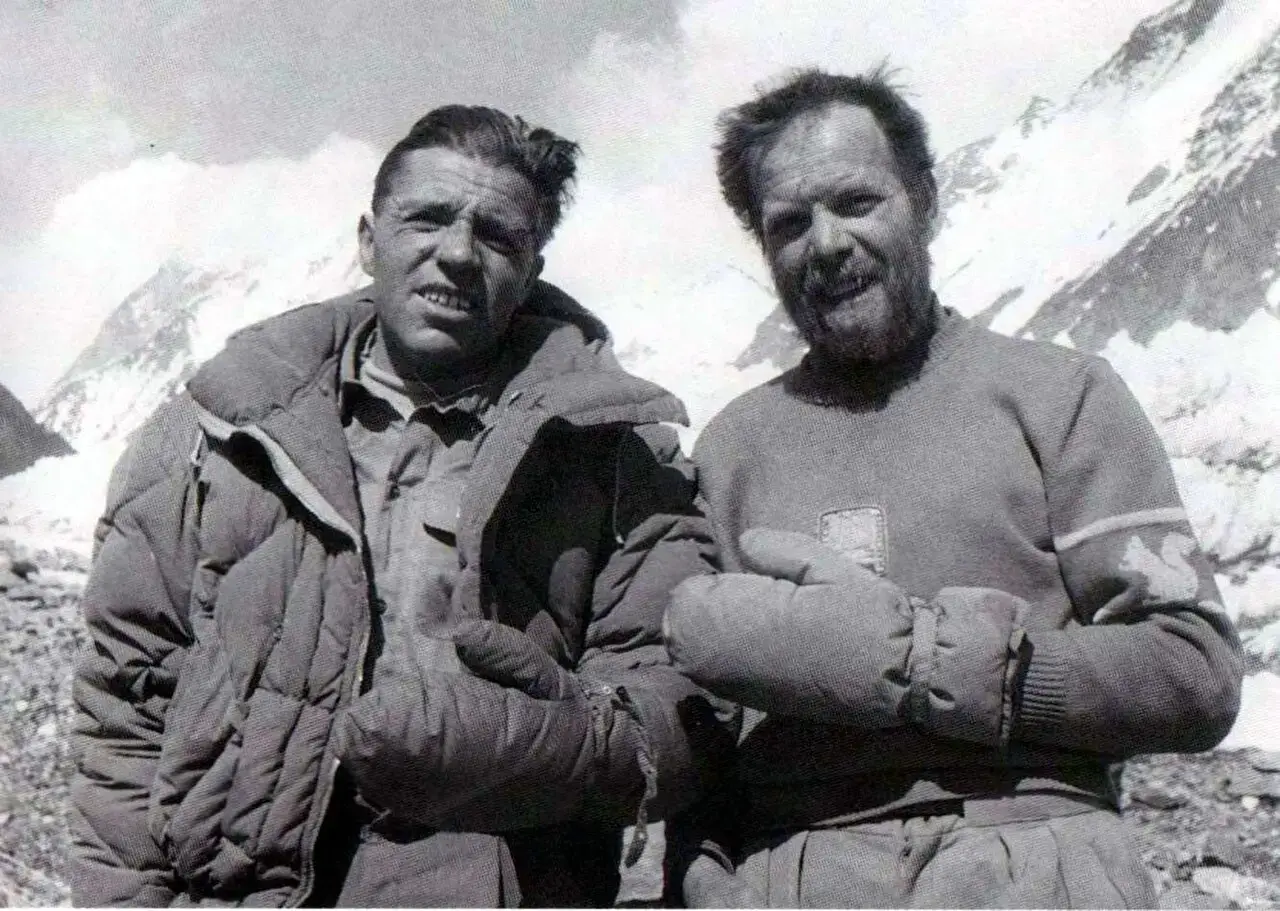
Compagnoni (left) and Lacedelli, frostbitten on their return from the summit of K2, Wikipedia
The Mountain No One Forgave
When climbers speak of K2, they rarely speak of joy. Rising to 8,611 meters, K2 has always been steeper, colder, and less forgiving than Everest. In the early 1950s, it was still unclimbed – a brutal pyramid of ice and rock that resisted every attempt.
For Italy, the second-highest mountain on Earth represented more than a summit. It was a chance to reclaim pride after years of failed Himalayan ambitions. In 1954, an Italian expedition finally appeared strong enough to succeed.
But the climb that followed would leave a scar on mountaineering history that lasted half a century.
An Expedition Built on Ambition
The expedition was led by Ardito Desio, a determined and authoritarian leader whose focus was singular: reach the summit at any cost. The team included strong climbers, but two names would define the story forever – Achille Compagnoni and Lino Lacedelli.
And then there was Walter Bonatti – young, immensely talented, and already considered one of the finest climbers of his generation. Bonatti was not chosen for the summit team. His role was support.
That decision would change everything.
The route chosen was the Abruzzi Ridge, the most logical line but still dangerously exposed to wind and avalanches. Camp by camp, the Italians pushed higher, relying on bottled oxygen – still controversial at the time – to give the summit team a chance.
The Night Everything Went Wrong
On the final push, Compagnoni and Lacedelli were assigned the summit attempt. Bonatti, along with Pakistani high-altitude porter Amir Mahdi, was tasked with carrying oxygen bottles to the highest camp.
But high on the mountain, at over 8,000 meters, the plan collapsed.
Compagnoni and Lacedelli had pitched their final camp far higher than agreed, in a position that was difficult to find and nearly impossible to reach in darkness. When Bonatti and Mahdi arrived late in the day, they could not locate the tent.
Shouting into the wind, oxygen bottles running low, and night falling fast, Bonatti faced a terrible choice: abandon the mission – or stay exposed at extreme altitude.
He chose to stay.
Without a tent, without oxygen, Bonatti and Mahdi were forced to bivouac in the open, clinging to the mountain through the night in temperatures that should have killed them. Mahdi suffered catastrophic frostbite. Bonatti survived-but barely.
The next morning, Compagnoni and Lacedelli retrieved the oxygen and continued upward.
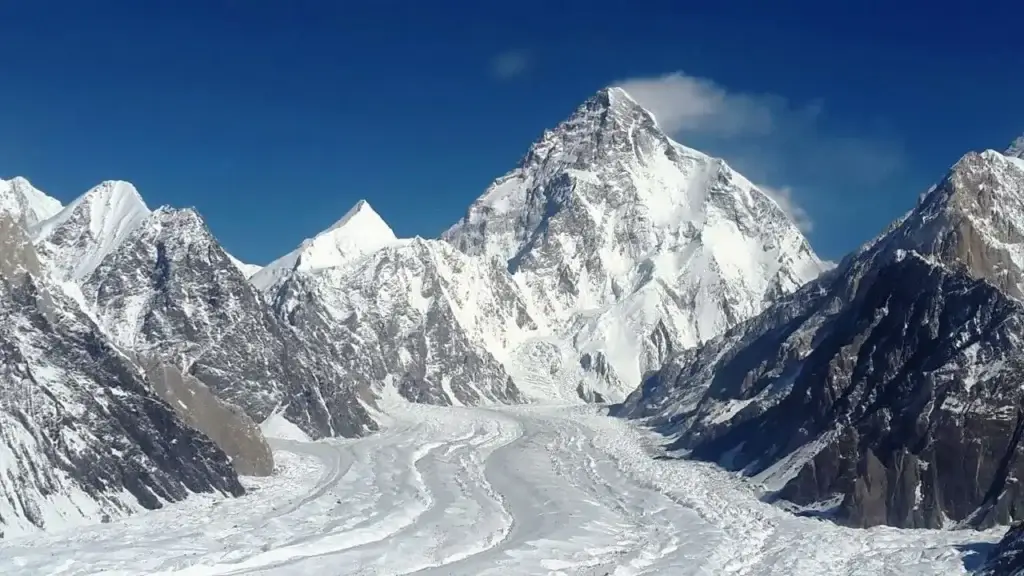
K2
The Summit – and the Silence
On July 31, 1954, Compagnoni and Lacedelli stood on the summit of K2-the first humans ever to do so. Italy celebrated. The expedition was declared a national triumph.
But almost immediately, a different story began circulating.
Bonatti was accused-implicitly and explicitly – of selfishness, of misusing oxygen, of endangering the summit bid. Official expedition reports painted him as reckless. The narrative became fixed: the summit had been achieved despite Bonatti, not because of him.
Amir Mahdi was quietly removed from the story altogether.
For decades, Bonatti lived under a cloud of accusation.
A Truth Buried – and Recovered
Bonatti insisted, from the beginning, that he had done exactly what he was ordered to do – and more. He had risked his life to deliver oxygen that made the summit possible. He had bivouacked in the open not by choice, but because the agreed camp had been moved without his knowledge.
For years, his voice was ignored.
Only decades later did the truth begin to surface. Independent investigations, eyewitness testimonies, and finally an official review by the Italian Alpine Club confirmed Bonatti’s version of events. The accusations were false. The narrative had been shaped by ambition, hierarchy, and national pressure.
In 2004, fifty years after the ascent, Bonatti was formally exonerated.
The summit of K2 stood – but history had finally shifted.
Why K2 1954 Still Matters
The first ascent of K2 is remembered not just for reaching the top, but for exposing the darker side of exploration: the politics, the silence, and the human cost hidden behind national glory.
It asks a question that still resonates today:
Who really pays for a summit?
K2 did not simply test strength and endurance. It tested integrity-and revealed how easily truth can be buried beneath success.
In Summit Chronicles, K2 1954 stands as a reminder that the highest peaks do not just measure altitude. They measure character.

Share this post:



Comments