
How to Start Mountaineering: Kashmir Mountains
Often overshadowed by the Himalaya and Karakoram, the mountains of Kashmir offer accessible alpine routes ideal for beginners in South Asia.
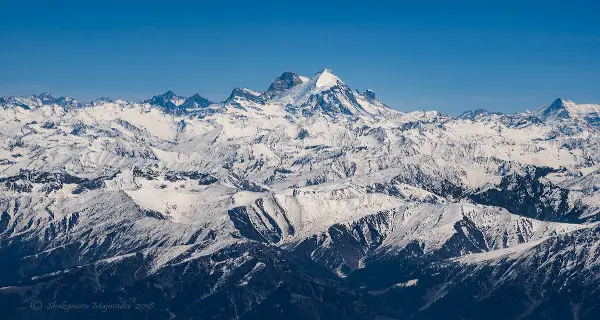
Kashmir Mountains, Photo: Kashmirmountains
Regional Overview
The mountain landscapes of Kashmir sit at the crossroads of the Himalaya, Karakoram, and Hindu Kush, forming one of the most visually dramatic yet less-publicized alpine regions in South Asia. Deep green valleys, high meadows, glacier-fed rivers, and snow-covered ridgelines define the terrain. While the region is often associated with complex political realities, its mountains remain a powerful and accessible gateway into high-altitude mountaineering.
Unlike the extreme vertical walls of the Karakoram or the massive Himalayan giants, many Kashmir peaks offer moderate slopes, non-technical glacier routes, and gradual altitude gain. Several of these mountains have long been used by regional climbing institutes and training programs, making them well suited for beginners who want to step beyond trekking and into real mountaineering.
This guide focuses on four accessible introductory objectives within the greater Kashmir region: Mount Harmukh, Kolahoi Peak, Sunset Peak, and Nun Kun (Kun Peak route) – all offering non-technical routes suitable for first alpine experiences.
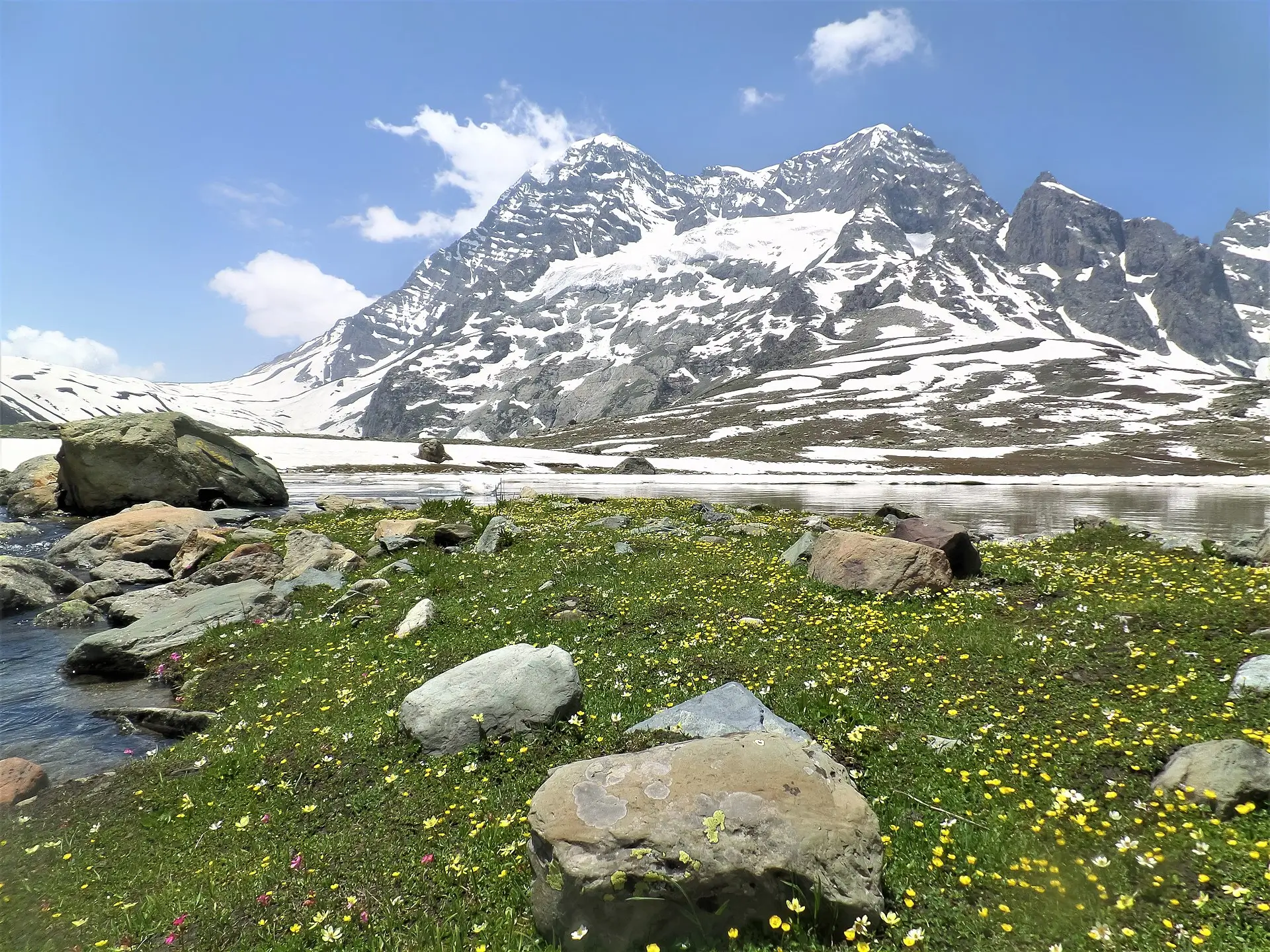
Mount Harmukh (5,142 m), by Wikipedia
Mount Harmukh (5,142 m)
A sacred and striking peak rising above the Kashmir Valley, ideal for first glacier experience.
Overview
Mount Harmukh stands prominently above Srinagar and the great lakes of northern Kashmir. Its dramatic pyramid shape makes it one of the region’s most recognizable peaks. While visually impressive, the standard route to Harmukh remains non-technical in stable summer conditions, involving glacier travel and moderate snow slopes rather than technical climbing.
Access / Base Location
The climb typically begins near Gangbal Lake, reached via Sonamarg or Naranag. The approach trek is scenic and gradual, providing natural acclimatization before reaching the glacier zones higher on the mountain.
Easiest Route
The normal route ascends via the Harmukh Glacier, following steady snow slopes toward the summit ridge. Crevasse awareness and roped travel are necessary, but no steep technical sections are involved. The final summit section offers expansive views over the Kashmir Valley and surrounding ranges.
Best Season & Difficulty
Best Season: July to September
Difficulty: Easy to Moderate (PD / F+)
Duration: 4-6 days
Why It’s Good for Beginners
Harmukh provides a complete mountaineering introduction – glacier travel, altitude above 5,000 meters, and expedition-style camping – without technical climbing. It’s a strong first objective for climbers transitioning from trekking to mountaineering.
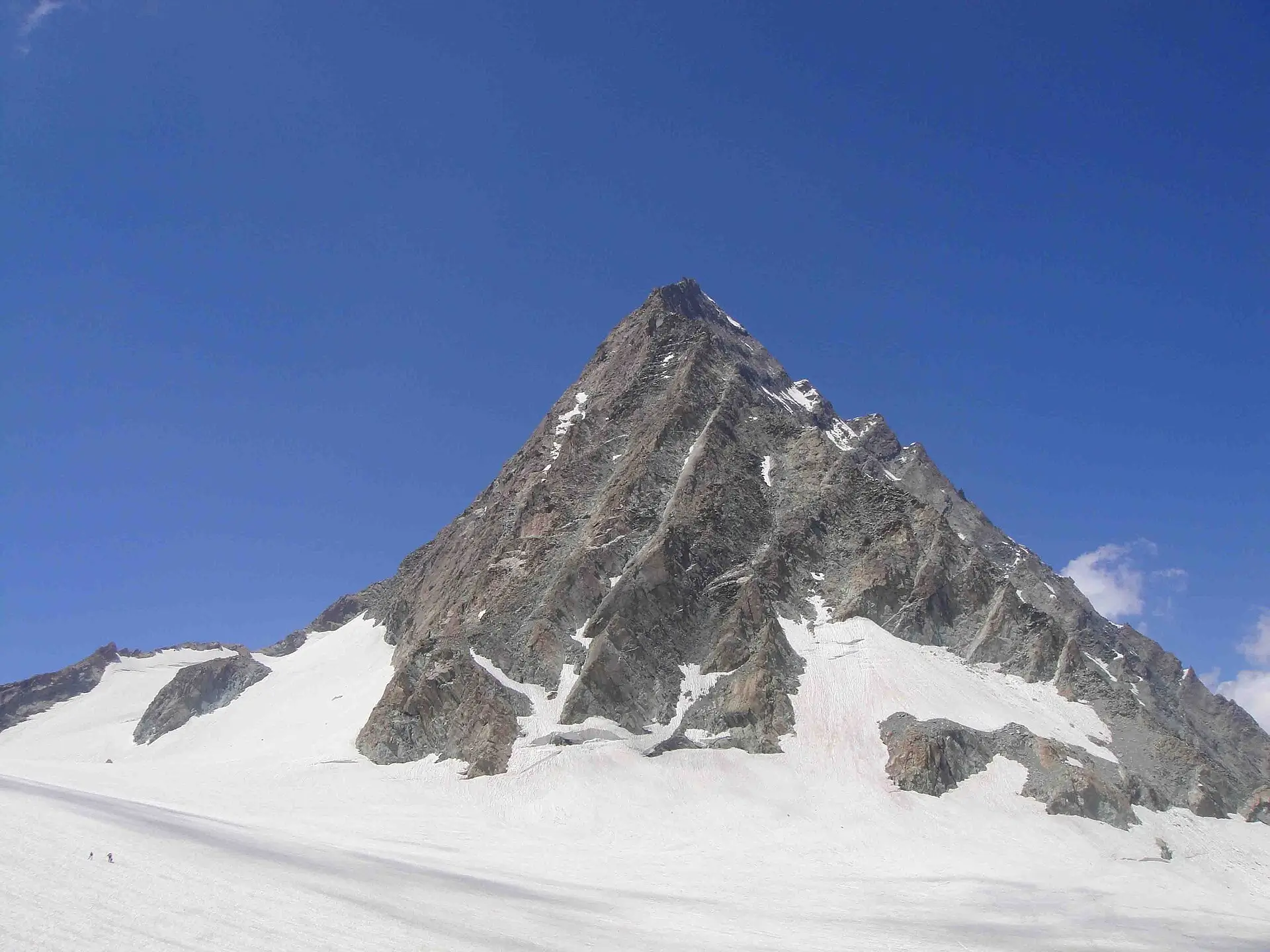
Kolahoi Peak (5,425 m)
Known as the “Matterhorn of Kashmir,” yet accessible via its standard glacier route.
Overview
Kolahoi Peak rises above the Lidder Valley near Pahalgam, its sharp summit profile giving it a dramatic appearance. Despite its striking shape, the normal route avoids technical rock climbing and follows the Kolahoi Glacier to the summit ridge.
Access / Base Location
Most expeditions begin from Pahalgam, trekking through alpine meadows before establishing camp near the glacier. The approach is gradual and allows for proper acclimatization.
Easiest Route
The standard ascent follows the Kolahoi Glacier on moderate snow slopes. The terrain remains manageable under stable weather conditions, with roped glacier travel required. The summit ridge is narrow but not technical.
Best Season & Difficulty
Season: July to early September
Difficulty: Moderate (PD)
Duration: Moderate (PD)
Why It’s Good for Beginners
Kolahoi introduces climbers to larger glacier systems and slightly steeper summit sections while still avoiding technical climbing. It builds confidence for future Himalayan or Karakoram objectives.
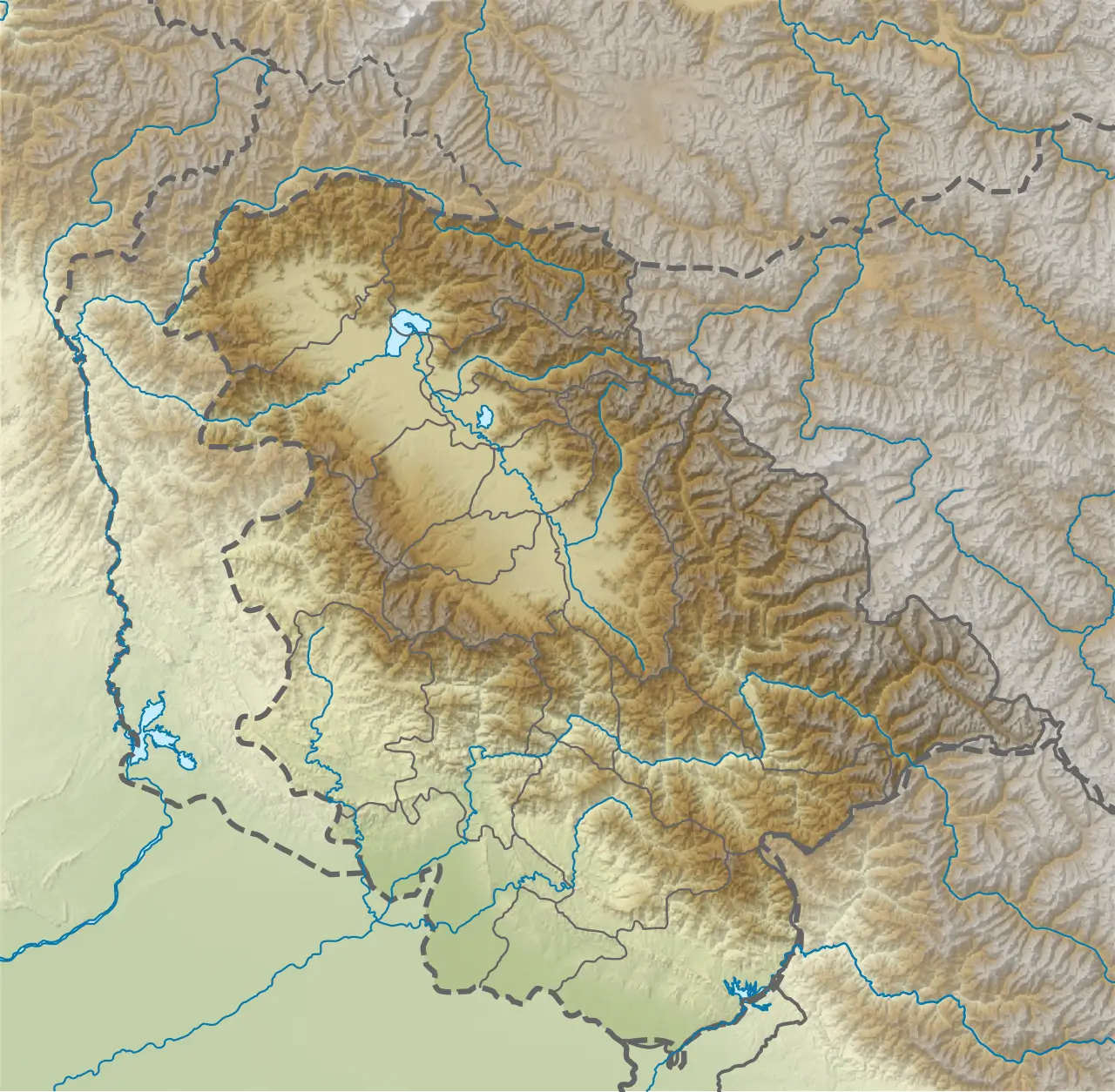
Sunset Peak (4,745 m), Photo: Wikipedia
Sunset Peak (4,745 m)
A gentle alpine summit offering one of the easiest high points in the Kashmir region.
Overview
Sunset Peak lies near the Pir Panjal range and is widely regarded as one of the most accessible high-altitude summits in Kashmir. Its rounded slopes and steady gradient make it a popular objective for mountaineering courses and first-time climbers.
Access / Base Location
The climb generally starts from the Yusmarg area, with a gradual approach through alpine meadows before reaching higher camps. The logistics are simpler compared to more glaciated peaks.
Easiest Route
The ascent follows grassy slopes that transition into snowfields near the summit. No technical climbing is required, and the route remains straightforward in stable summer conditions. The panoramic views extend toward the greater Himalayan system.
Best Season & Difficulty
Season: June to September
Difficulty: Easy (F)
Duration: 2-3 days
Why It’s Good for Beginners
Sunset Peak is ideal for those attempting their first high-altitude climb. It allows climbers to experience altitude and snow travel without exposure to complex glacier hazards.
Kun Peak (7,077 m) – Normal Route Option
A high but relatively approachable Himalayan summit often considered more accessible than neighboring Nun.
Overview
Kun Peak, part of the Nun-Kun massif, rises dramatically in the greater Kashmir Himalaya. While its twin, Nun, is steeper and more technical, Kun offers a comparatively moderate normal route. For strong, well-prepared beginners under guided supervision, it can serve as a first major Himalayan expedition.
Access / Base Location
Access typically begins from Suru Valley, with established trekking approaches leading to base camp. The region has long been part of Indian mountaineering expeditions.
Easiest Route
The standard route ascends snow and glacier slopes with no extreme technical sections, though the altitude and length of the climb require strong preparation. Camps are established progressively to support acclimatization.
Best Season & Difficulty
Season: July to August
Difficulty: Moderate (PD)
Duration: 18-22 days
Why It’s Good for Beginners
For climbers ready to move beyond introductory peaks, Kun provides a true expedition experience in a relatively controlled format. It teaches high-camp management, glacier navigation, and extended time at altitude.
Final
The mountains of Kashmir offer a balanced entry point into South Asian mountaineering. From gentle alpine summits like Sunset Peak to larger glacier objectives such as Harmukh and Kolahoi, the region provides a progression that builds real mountaineering skills without immediate technical demands.
Starting here is about understanding terrain, altitude, and patience. In the quiet valleys and glacier basins of Kashmir, beginners can develop the foundations that prepare them for larger Himalayan or Karakoram expeditions.

Share this post:



Comments