
How to Start: First Routes in the Nepal Himalaya
The Nepal Himalaya is home to the world’s highest mountains, but it also offers accessible peaks where beginners can safely begin their mountaineering journey.
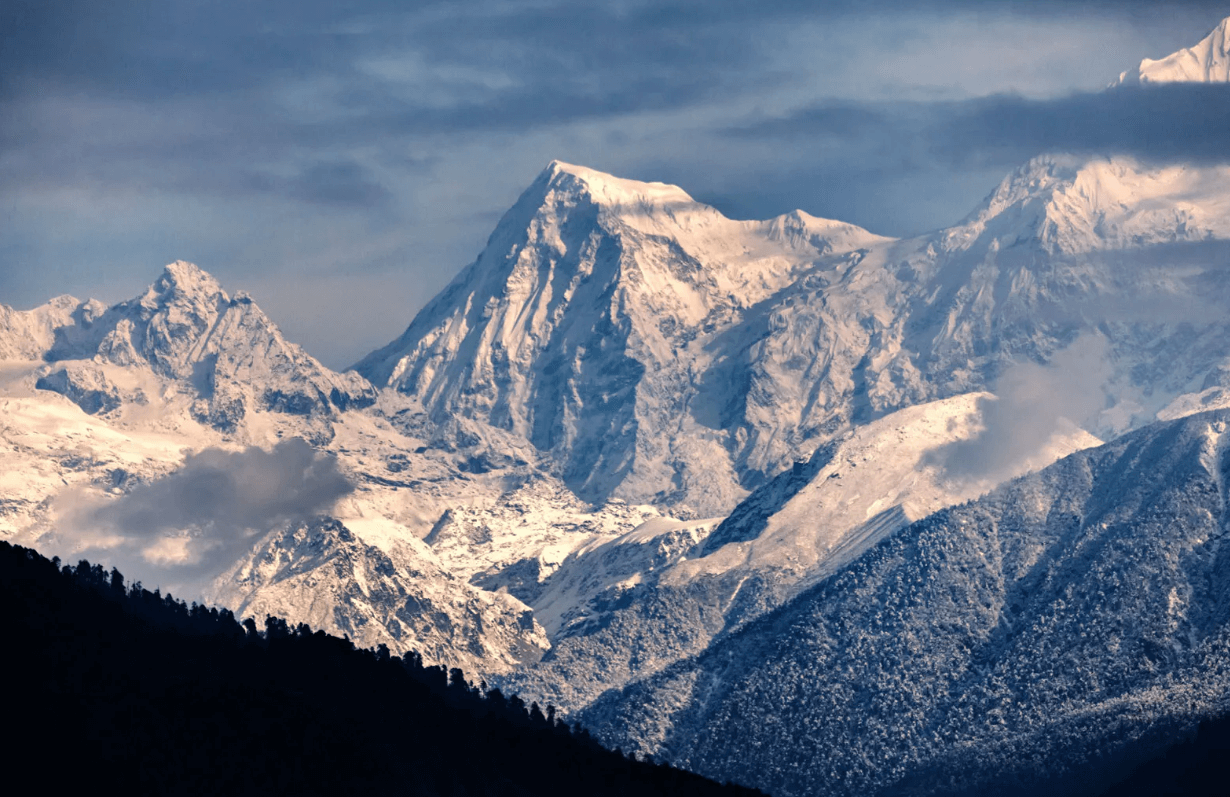
Nepal Himalayas, Photo: artqu/stock.adobe.com
Regional Overview
The mountains of Nepal form the central section of the Himalayan range, stretching along the northern border of the country and containing eight of the world’s fourteen 8,000-meter peaks. Names like Everest, Lhotse, and Annapurna often dominate the imagination, giving the impression that Himalayan mountaineering is only for elite climbers. In reality, Nepal has long provided a structured pathway for beginners through its famous trekking peaks and non-technical alpine routes.
These mountains are generally between 5,500 and 6,500 meters, high enough to provide real high-altitude experience while still avoiding technical climbing. With well-established trekking routes, reliable logistics, and experienced guiding infrastructure, the Nepal Himalaya is one of the best places in the world to take a first step into serious mountaineering. This guide focuses on four classic beginner objectives: Island Peak, Mera Peak, Lobuche East, and Yala Peak.
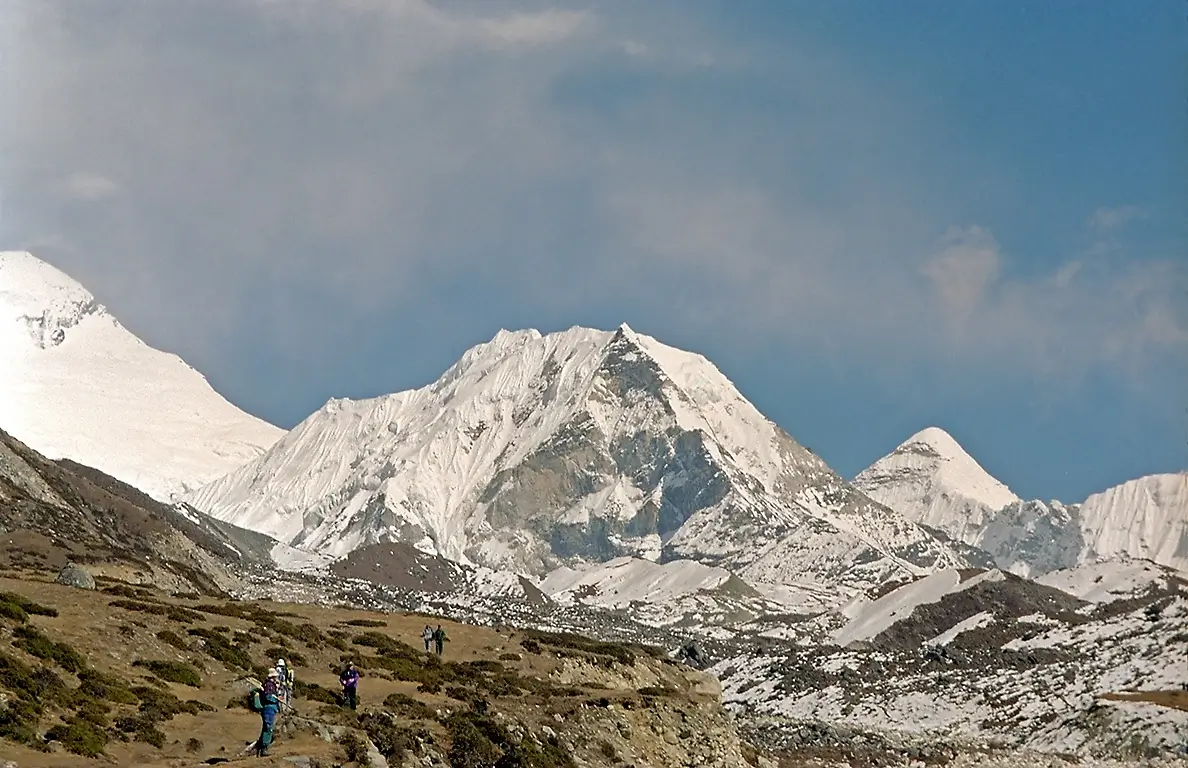
Island Peak (Imja Tse, 6,189 m), by Wikipedia
Island Peak (Imja Tse, 6,189 m)
A classic Himalayan training peak rising above the Khumbu Valley.
Overview
Island Peak stands in the heart of the Khumbu region, surrounded by towering giants such as Lhotse and Ama Dablam. Its striking position within the Everest region makes it one of Nepal’s most popular beginner mountaineering objectives. Although the summit looks dramatic from afar, the normal route involves manageable glacier travel and moderate snow slopes.
Access / Base Location
The climb begins along the famous Everest Base Camp trekking route, usually starting with a flight to Lukla and trekking through Namche Bazaar and Dingboche. This gradual approach provides excellent acclimatization before reaching Island Peak Base Camp.
Easiest Route
The normal route crosses the Imja Glacier before climbing steady snow slopes toward the summit ridge. Fixed ropes are often installed on the steeper upper section, making the climb accessible even to those with limited technical experience. The final summit offers spectacular views across the Khumbu Himal.
Best Season & Difficulty
Best Season: April to May, October to November
Difficulty: Moderate (PD)
Duration: 12-16 days including trek
Why It’s Good for Beginners
Island Peak combines a classic Himalayan trekking journey with a manageable summit climb. It introduces glacier travel, fixed rope techniques, and altitude management while remaining achievable for first-time mountaineers.
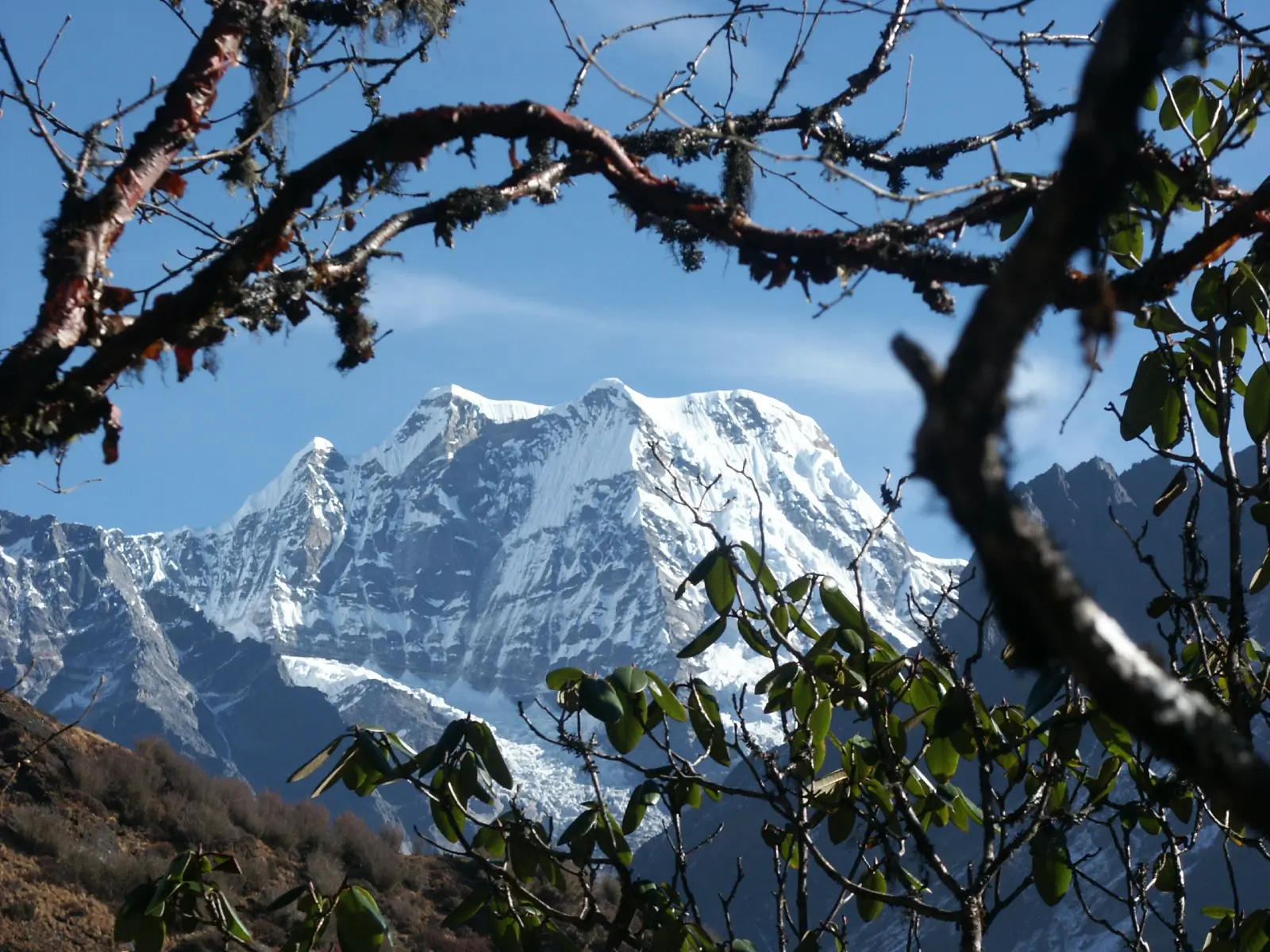
Mera Peak (6,476 m)
Nepal’s highest trekking peak and one of the most accessible 6,000-meter summits.
Overview
Mera Peak rises in the remote Hinku Valley, offering one of the most rewarding high-altitude climbs in Nepal. Its broad glacier slopes and gentle summit dome make it technically straightforward, even though the altitude is significant.
Access / Base Location
The approach typically begins with a flight to Lukla, followed by a quieter trekking route through the Hinku Valley rather than the busy Everest trail. This journey provides gradual acclimatization and a remote Himalayan experience.
Easiest Route
The normal route climbs long glacier slopes with a steady gradient, eventually reaching a broad summit ridge. While crampons and ice axes are required, the terrain remains non-technical. The summit panorama is one of the finest in the Himalaya, including views of Everest, Lhotse, Makalu, Cho Oyu, and Kanchenjunga.
Best Season & Difficulty
Season: April to May, October to November
Difficulty: Easy to Moderate (F / PD-)
Duration: 15-18 days including trek
Why It’s Good for Beginners
Mera Peak offers the rare chance to climb nearly 6,500 meters on relatively gentle terrain. It’s ideal for learning altitude pacing, glacier movement, and expedition discipline in a controlled environment.
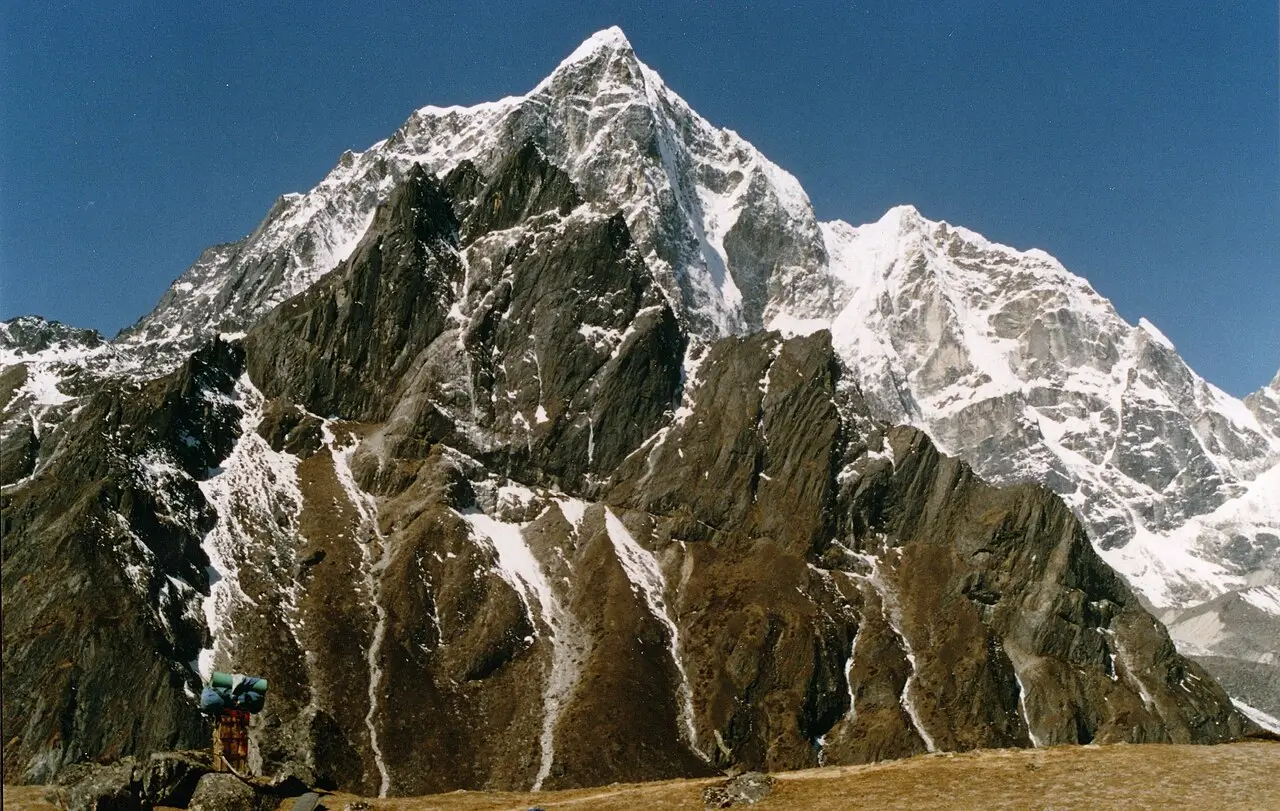
Lobuche East (6,119 m), Photo: Wikipedia
Lobuche East (6,119 m)
A dramatic Khumbu summit offering a slightly more technical introduction to Himalayan climbing.
Overview
Lobuche East stands above the Khumbu Glacier, close to the Everest Base Camp trail. Compared with Island Peak and Mera Peak, it offers a more alpine character, with sharper ridges and steeper snow slopes. Yet the normal route remains achievable for beginners with basic mountaineering training.
Access / Base Location
The approach follows the Everest Base Camp trekking route, making logistics straightforward. Many climbers combine the ascent with the Everest trek, using acclimatization gained along the trail.
Easiest Route
The standard route ascends snow slopes and a narrow summit ridge, often protected by fixed ropes. The terrain is slightly steeper than other trekking peaks but still manageable with proper guidance and preparation.
Best Season & Difficulty
Season: April to May, October to November
Difficulty: Moderate (PD+)
Duration: 12-15 days including trek
Why It’s Good for Beginners
Lobuche East is perfect for climbers who want a more technical feeling climb while still remaining within the realm of beginner Himalayan mountaineering.
Yala Peak (5,732 m)
A quiet and accessible Himalayan summit ideal for first-time mountaineers.
Overview
Yala Peak rises in the Langtang region north of Kathmandu and is often considered one of Nepal’s most beginner-friendly mountaineering objectives. The mountain sits in a spectacular glacial basin surrounded by high Himalayan summits but remains technically simple.
Access / Base Location
The climb begins with a drive from Kathmandu to Syabrubesi, followed by a scenic trek through the Langtang Valley. The approach is shorter than many other Himalayan expeditions, making it attractive for climbers with limited time.
Easiest Route
The normal route follows gradual snow slopes and open glacier terrain toward the summit ridge. Under stable conditions the climb requires only basic mountaineering skills.
Best Season & Difficulty
Season: March to May, September to November
Difficulty: Easy (F)
Duration: 7-10 days including trek
Why It’s Good for Beginners
Yala Peak is often the first mountaineering summit for climbers in Nepal. Its moderate altitude, clear route, and short expedition format make it an ideal training peak before attempting higher objectives.
Final
The Nepal Himalaya offers one of the most structured and rewarding pathways into mountaineering anywhere in the world. Peaks like Island Peak, Mera Peak, Lobuche East, and Yala Peak provide a natural progression from trekking to true alpine climbing. Here, beginners can learn glacier travel, altitude management, and expedition planning while surrounded by some of the highest mountains on Earth.
Starting mountaineering in Nepal is less about difficulty and more about learning patience, respect for altitude, and the rhythm of Himalayan climbing.

Share this post:



Comments