
Everest Rule Buzz: What’s Real and What’s Misleading
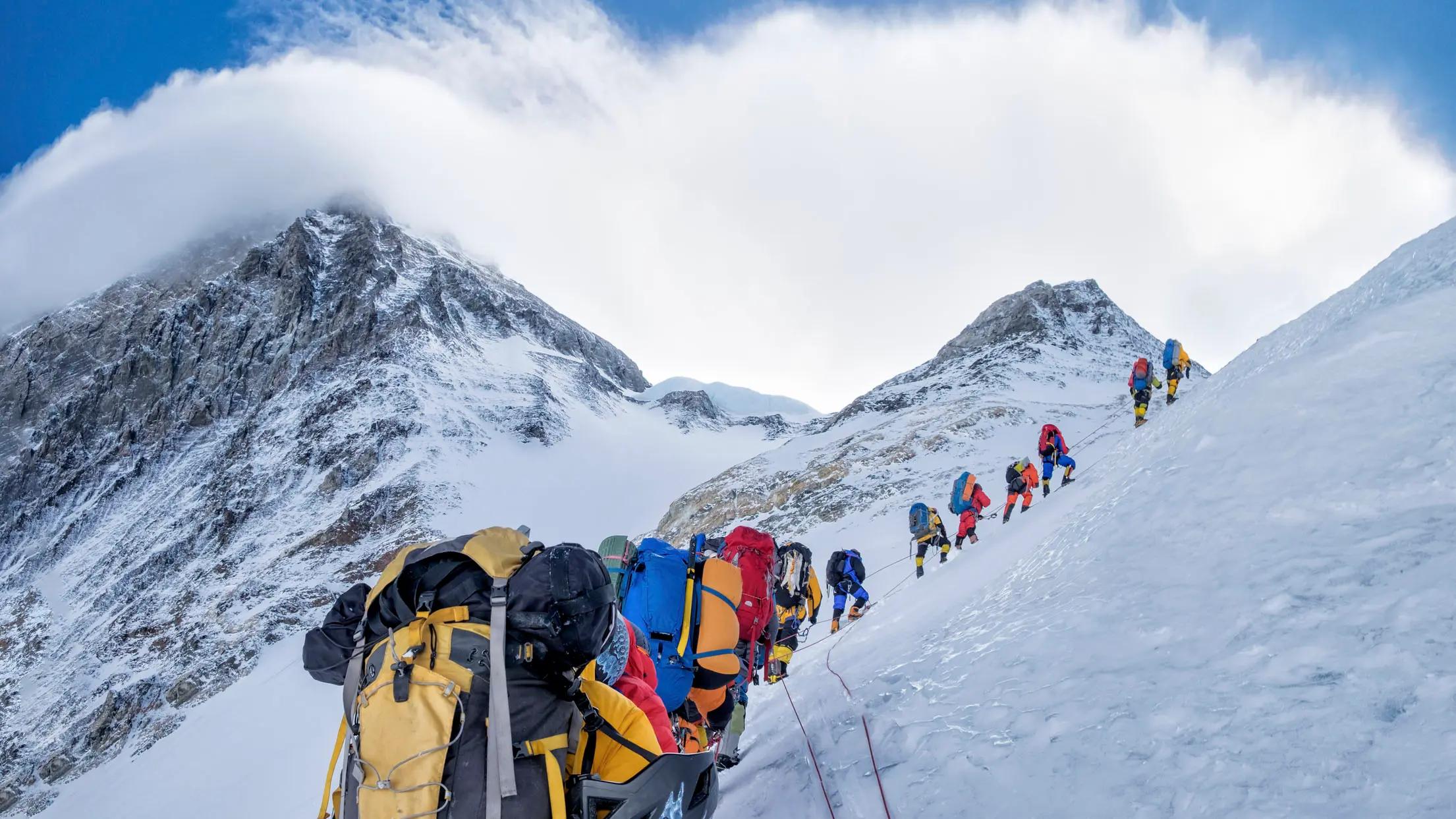
Photo: GettyImages
Mountaineering communities worldwide are buzzing over proposed changes to Mount Everest climbing regulations in Nepal, but experts say some media coverage has oversimplified or mischaracterized the situation. The discussion centers on a provision in Nepal’s draft Tourism Bill that would require future Everest aspirants to have summited a 7,000-metre peak in Nepal before applying for an Everest permit – but the rule is not yet law and will not affect the 2026 climbing season.
What the draft regulation says
Nepal’s government recently passed the Tourism Bill 2081 in its National Assembly, and among its most talked-about clauses is a requirement that climbers show documented proof of climbing at least one 7,000-metre peak in Nepal before attempting Everest. The intent behind the provision is to ensure that climbers have substantial high-altitude mountaineering experience, which could improve safety on the world’s highest peak and reduce pressure on rescue services. The bill also includes other proposed changes – such as health certification requirements, insurance rules, and environmental fund provisions -though these are separate from the Everest entry requirement.
Supporters of the measure say it could help curb the number of underprepared climbers attempting Everest, a phenomenon linked in some media reporting to congestion and accidents on the mountain. There are dozens of 7,000-metre peaks in Nepal – arguably ideal proving grounds – and requiring prior ascents would ensure that climbers have meaningful high-altitude experience before tackling 8,848 metres.
Misrepresentation and myth in coverage
Despite wide circulation of headlines suggesting that climbers are already required to have climbed a 7,000-metre peak before Everest, Everest commentator Alan Arnette and other experts have cautioned that this narrative is premature and overstates the current status of the law. In a recent Gripped Magazine piece, Arnette noted that the bill is still under parliamentary consideration, still needs approval by Nepal’s House of Representatives, and has not yet been signed by the president – meaning it is not yet binding or enforceable.
“Once again, the mainstream media is misrepresenting new rules around Everest,” Arnette wrote on social media. He also pointed out that climbers who have already climbed high and technically demanding mountains outside Nepal – such as in South America, Pakistan, or Kyrgyzstan – could be unfairly disadvantaged if the rule were strictly limited to Nepalese peaks.
What comes next
The draft legislation is expected to move to Nepal’s House of Representatives following the country’s March 5 general election, and only after that could it require presidential assent to come into effect – a process that could take months. Because of this timeline, experts agree that the provision would not impact climbers during the 2026 Everest season.
Climbing industry observers say the conversation itself highlights an important shift: increasing emphasis on experience and preparedness, rather than climbing Everest as someone’s first high-altitude objective. But as the debate continues, clarity -not sensational headlines – will be crucial for climbers and expedition planners around the world.
A familiar pattern on Everest
What this episode ultimately reveals is less about a single regulation and more about a recurring pattern around Everest itself. Each proposed change – whether real, partial, or still under debate – quickly becomes magnified into global headlines, often stripped of legal nuance and practical timelines.
For expedition operators, guides, and climbers, the gap between policy discussion and policy reality matters. Permits, logistics, and long-term training plans are built years in advance, and premature conclusions can create confusion where none yet exists.
At the same time, the debate touches on a deeper, unresolved question: how Everest should balance access, safety, experience, and responsibility in an era of growing pressure on the mountain. Whether or not this specific rule comes into force, the direction of travel is clear – toward greater emphasis on preparation and competence, rather than Everest as a first major objective.
For now, the only certainty is this: no new requirement is currently in effect, and climbers planning future Everest attempts should look beyond headlines and follow verified updates as Nepal’s legislative process continues.
On Everest, as ever, clarity matters – and so does patience.

Share this post:



Comments
1 Comments
A really good blog and me back again.