
High-Altitude Climbing Banned in Peru’s Cordillera Blanca
Peru has temporarily banned all climbing above 5,000 meters in Huascarán National Park, home to the famed Cordillera Blanca, citing heightened risks linked to climate change and unstable mountain conditions. The restriction took effect on December 24 and will remain in place until the end of March.
The ban covers all high peaks in the range, including Huascarán (6,757m), the country’s highest mountain, and the iconic Alpamayo (5,947m), as well as the rest of the Cordillera Blanca’s 5,000- and 6,000-meter nevados.
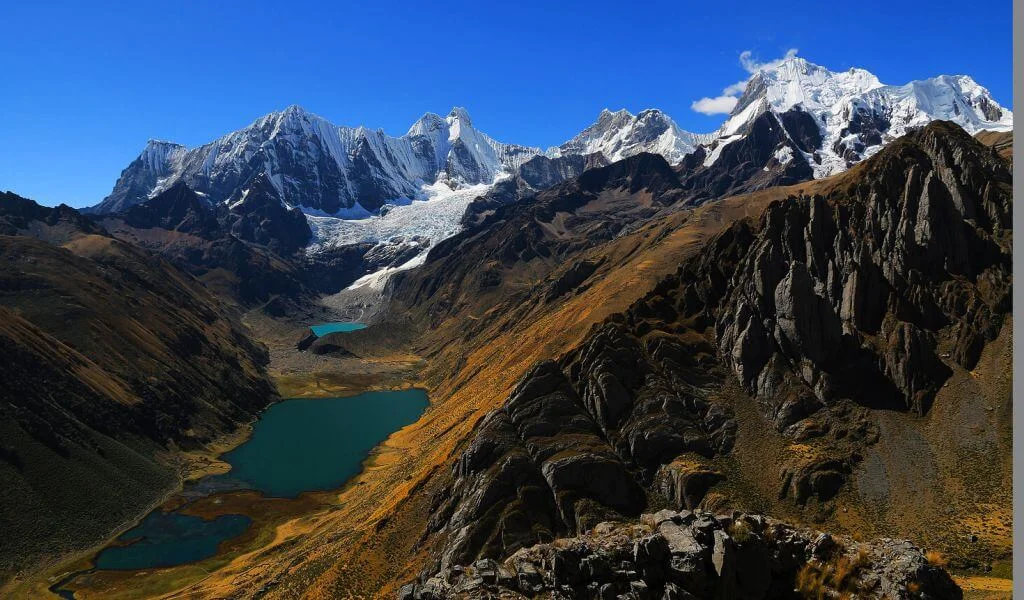
Photo Courtesy: andeanrajuexpeditions.com
Why the ban?
Authorities point to accelerating glacial retreat, widening crevasses, unstable ice, and less predictable weathe – all of which have increased objective hazards for climbers. In recent years, alpinists have repeatedly warned of collapsing seracs and cornices, particularly on classic routes.
Greek climber Fotis Theorachis highlighted the growing danger in a 2022 report on Alpamayo, noting fragile ice features and threatening overhangs. Spanish brothers Iker and Eneko Pou, who have opened more than 20 routes in Peru, told ExplorersWeb that drier conditions in recent seasons have altered ice profiles across many routes. They added that the 2025 season was unusual, with heavy snow above 5,500m late into May – conditions that raised avalanche risk, even during the Peruvian winter.
“This route offers a highly aesthetic connection between the main summits of the Santa Marta range,” wrote guide Edwin Ruiz, “but requires previous experience in high mountain terrain and skills on snow and ice.”
What’s still open?
The measures apply only to high-altitude climbing. Lower crags such as Los Olivos and Hatun Machay remain open, as do popular trekking routes like the Santa Cruz Trek. Nonetheless, climbers who typically attempt easier 5,000m peaks – such as Pisco, Ishinca, and Urus – are affected by the closure.
Timing and seasonality
The restriction coincides with the rainy season (November–March), traditionally the least favorable period for climbing the Cordillera Blanca’s high peaks. The prime climbing window usually runs from June to August, when conditions are drier and more stable. During the wet months, many climbers opt for Ecuador and Colombia to the north, or Chile and Argentina farther south, where summer conditions can be more favorable.
A changing range
Stretching nearly 180 km north–south, the Cordillera Blanca contains 663 glaciers, 16 peaks above 6,000m, 17 above 5,000m, plus 269 lakes and 41 rivers. As temperatures rise, even mid-altitude objectives are changing. The Pou brothers recently climbed Nevado Churup (5,493m) and found what was once a classic snow-and-ice peak now marked by exposed, rotten rock and risky rappels – a stark example of how warming is reshaping routes.
Park authorities say the pause is necessary for safety and conservation, allowing time to reassess conditions before reopening the high peaks later in the year.
Source: Explorersweb

Share this post:



Comments