
How to Start Mountaineering: First Routes in the Caucasus
Straddling Europe and Asia, the Caucasus offers some of the continent’s highest peaks – and surprisingly accessible routes for beginners.
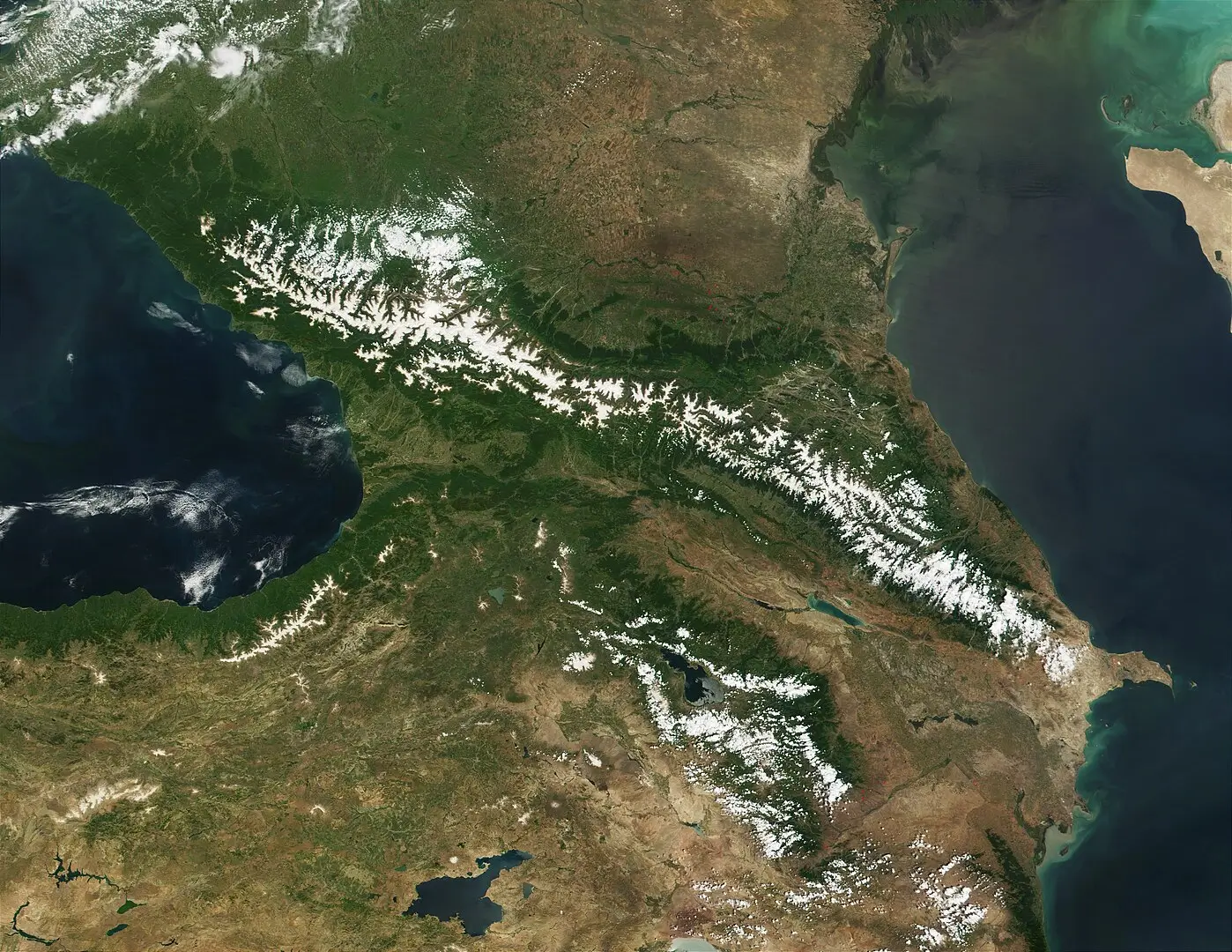
Satellite image of the Caucasus Mountains
Regional Overview
The Caucasus Mountains stretch between the Black Sea and the Caspian Sea, forming a dramatic natural border between Europe and Asia. Divided into the Greater Caucasus and Lesser Caucasus, the range is best known for its towering glaciated peaks, deep valleys, and strong mountaineering traditions – particularly in Georgia and Russia.
While the Caucasus is often associated with extreme climbs and legendary summits, it also provides several non-technical, well-established routes that are ideal for beginners. Good infrastructure, classic mountain huts, and long-used ascent lines make the region an excellent place to begin serious mountaineering. This guide focuses on four of the most accessible introductory peaks in the Georgian and Russian Caucasus: Mount Kazbek, Mount Elbrus, Mount Tetnuldi, and Dombay-Ulgen.
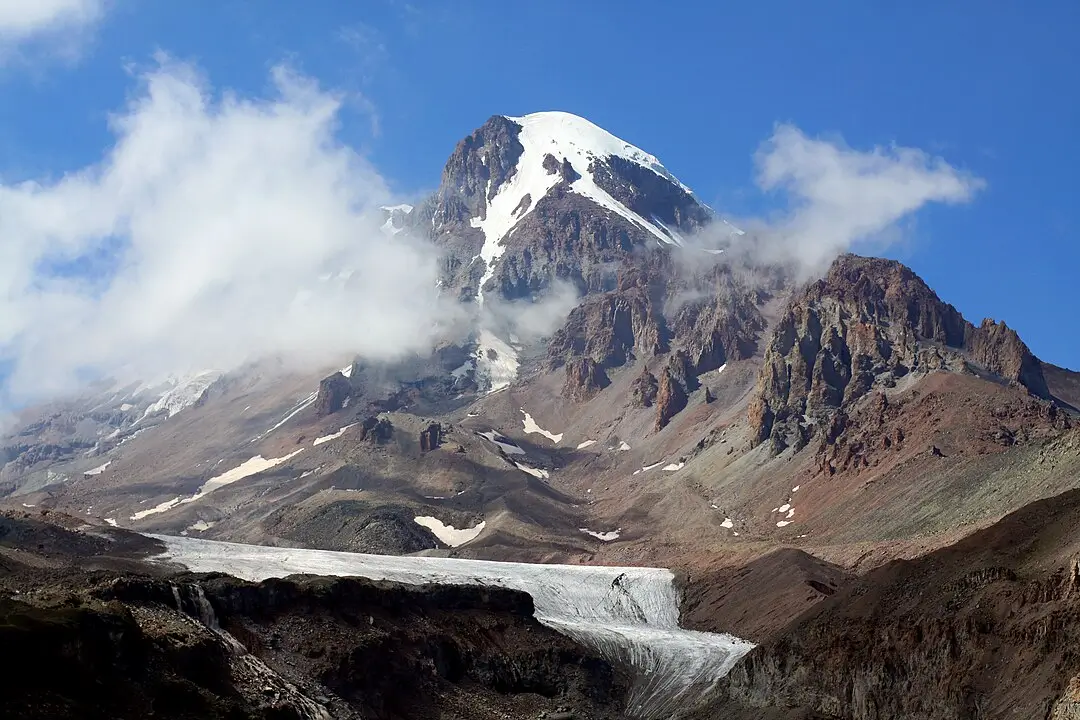
Mount Kazbek, Photo: Safa.daneshvar
Mount Kazbek (5,054 m)
A legendary Georgian volcano offering a classic introduction to high-altitude mountaineering.
Overview
Mount Kazbek rises above the Georgian Military Road as one of the most iconic peaks in the Caucasus. Its broad volcanic cone, extensive glaciers, and historical climbing routes make it a natural starting point for beginners aiming to experience altitude above 5,000 meters. While imposing in appearance, the standard route remains non-technical in summer and has been climbed for over a century.
Access / Base Location
Most ascents begin from the village of Stepantsminda (Kazbegi) in northern Georgia. From here, climbers approach the Bethlemi (Meteo) Hut, which serves as the main high camp and acclimatization base.
Easiest Route
The classic route ascends via the Gergeti Glacier, following a long but steady line toward the summit plateau. Crevasse awareness and basic glacier travel skills are required, but the slopes remain moderate throughout. The summit ridge is wide and exposed, offering expansive views across the Central Caucasus.
Best Season & Difficulty
Best Season: Late June to early September
Difficulty: Easy to Moderate (PD / F+)
Duration: 4-6 days
Why It’s Good for Beginners
Kazbek offers everything a first high-altitude climb should: clear logistics, a well-defined route, and manageable glacier terrain. It’s often the first 5,000-meter peak for climbers transitioning from hiking to mountaineering.

Mount Elbrus (5,642 m)
Europe’s highest peak and one of the most accessible high summits on the continent.
Overview
Mount Elbrus dominates the western Caucasus as a massive double-summit volcano and the highest mountain in Europe. Despite its height, Elbrus is widely regarded as one of the most beginner-friendly 5,000-meter peaks in the world, thanks to its gentle slopes and extensive infrastructure.
Access / Base Location
Most climbers approach from the south side, using cable cars from the Azau Valley to reach high altitude quickly. Mountain huts and shelters are available, reducing the need for complex expedition logistics.
Easiest Route
The normal route follows wide snow slopes from the upper lift stations toward the Pastukhov Rocks and onward to the summit plateau. While the climb is long and physically demanding, it involves no technical climbing. Weather and altitude remain the primary challenges.
Best Season & Difficulty
Season: June to early September
Difficulty: Easy (F)
Duration: 3-5 days
Why It’s Good for Beginners
Elbrus allows beginners to experience extreme altitude in a controlled environment. Its infrastructure, gentle terrain, and predictable routes make it an ideal introduction to big-mountain climbing.
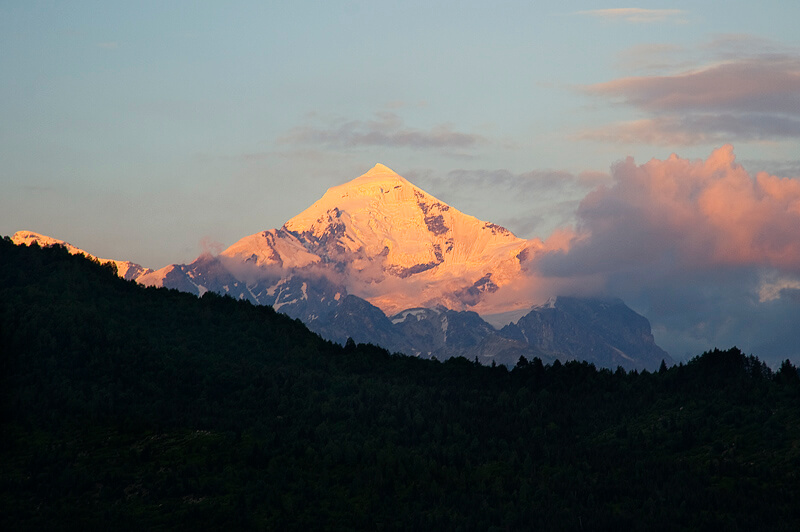
Mount Tetnuldi, view from Mestia, Photo: Tamar Korakhashvili
Mount Tetnuldi (4,858 m)
A beautiful Svanetian peak combining glacier travel and classic alpine scenery.
Overview
Mount Tetnuldi rises above the villages of Upper Svaneti, its elegant white slopes forming one of Georgia’s most photographed alpine silhouettes. Less crowded than Kazbek, Tetnuldi offers a quieter but equally rewarding experience, with long glacier approaches and broad summit slopes.
Access / Base Location
The mountain is accessed from Mestia and nearby Svan villages, with approaches leading into high alpine valleys below the Tetnuldi Glacier. Base camps are usually established on snow or moraine terraces.
Easiest Route
The standard route follows gentle glacier slopes, gradually gaining altitude toward the summit ridge. While roped travel is necessary, the terrain remains straightforward, and objective hazards are limited under good conditions.
Best Season & Difficulty
Season: July to early September
Difficulty: Easy to Moderate (PD)
Duration: 4-6 days
Why It’s Good for Beginners
Tetnuldi offers an excellent balance of altitude, glacier experience, and solitude. It’s ideal for climbers who want to develop glacier skills beyond the more commercial routes of Kazbek or Elbrus.
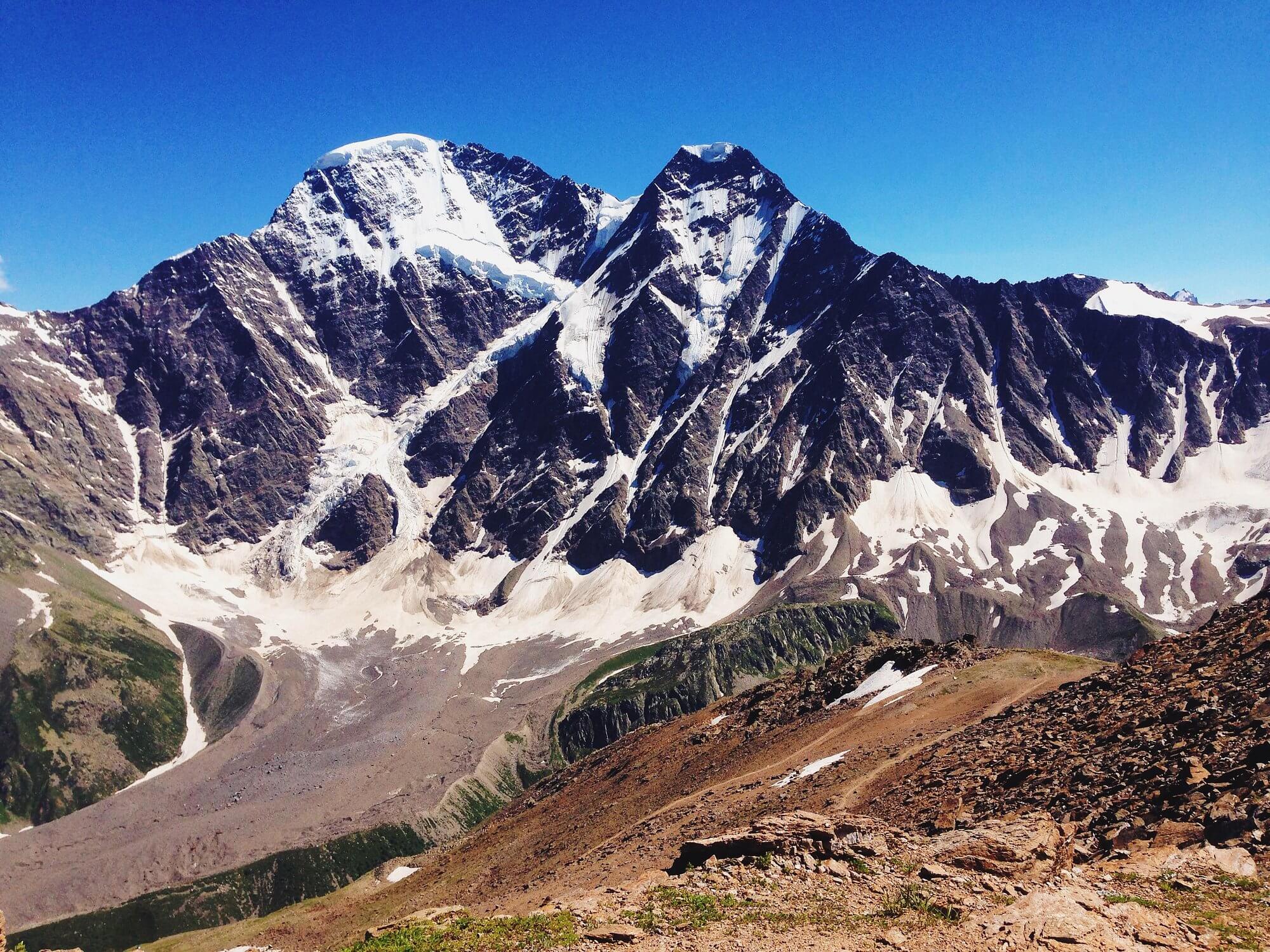
Mount Cheget, Photo: Tripadvisor, Alesya O
Mount Cheget (3,461 m)
A classic training peak near Elbrus, widely used to introduce beginners to Caucasus alpine terrain.
Overview
Mount Cheget rises above the Baksan Valley in the central Caucasus, directly opposite Mount Elbrus. While not as high as its famous neighbor, Cheget plays an important role in Caucasus mountaineering as a traditional training mountain. Its slopes, ridges, and panoramic viewpoints offer a genuine alpine environment without extreme altitude or technical difficulty, making it a natural first objective for beginners.
Access / Base Location
The mountain is accessed from the Cheget-Azau area in the Baksan Valley, one of the most developed mountaineering hubs in the Russian Caucasus. Road access is straightforward, and the presence of lifts, huts, and nearby accommodation simplifies logistics, especially for climbers new to the region.
Route Summary (Easiest Route)
The easiest routes on Mount Cheget follow broad ridgelines and open alpine slopes above the treeline. These paths gradually gain elevation and remain free of technical climbing. Depending on the chosen line and season, snowfields may be encountered, but the terrain stays predictable and well suited to steady movement and basic alpine navigation. The upper sections reward climbers with expansive views of Elbrus and the surrounding peaks.
Best Season & Difficulty
- Season: July to early September
- Difficulty: Easy (F)
- Duration: 1-2 days
Why It’s Good for Beginners
Mount Cheget is ideal for developing core mountaineering skills in a controlled environment. It allows beginners to practice pacing, altitude awareness, and movement on alpine terrain while staying close to infrastructure and safe exit options. As a preparatory peak before higher Caucasus objectives, Cheget has long been used as a stepping stone toward Elbrus and beyond.
Final
The Caucasus Mountains combine European accessibility with true alpine scale, making them one of the most compelling regions for beginner mountaineers. Peaks like Kazbek, Elbrus, Tetnuldi, and Cheget show that starting mountaineering here is not about technical difficulty, but about learning to manage altitude, weather, glaciers, and long summit days.
For those ready to step beyond hiking and into the world of real mountains, the Caucasus offers a powerful and authentic beginning.

Share this post:



Comments
1 Comments
I got what you intend,bookmarked, very decent website .