
How to Start Mountaineering: First Routes in the Rocky Mountains

Rocky Mountains, Photo: Gorgo
Regional Overview
Stretching from Canada to the southwestern United States, the Rocky Mountains form the backbone of North American alpine terrain. Vast, rugged, and deeply scenic, the Rockies offer everything from gentle alpine hikes to technical ice and rock routes. For beginners, however, the range hides a quieter side – broad trails, walk-up summits, and non-technical peaks that provide a safe introduction to mountaineering.
What makes the Rockies especially suitable for newcomers is their accessibility. National parks, established trailheads, clear signage, and strong rescue infrastructure allow climbers to experience real alpine environments without committing to technical climbing. In this guide, we explore four beginner-friendly routes in the Rocky Mountains that offer elevation, exposure, and classic mountain scenery – without ropes or advanced skills.
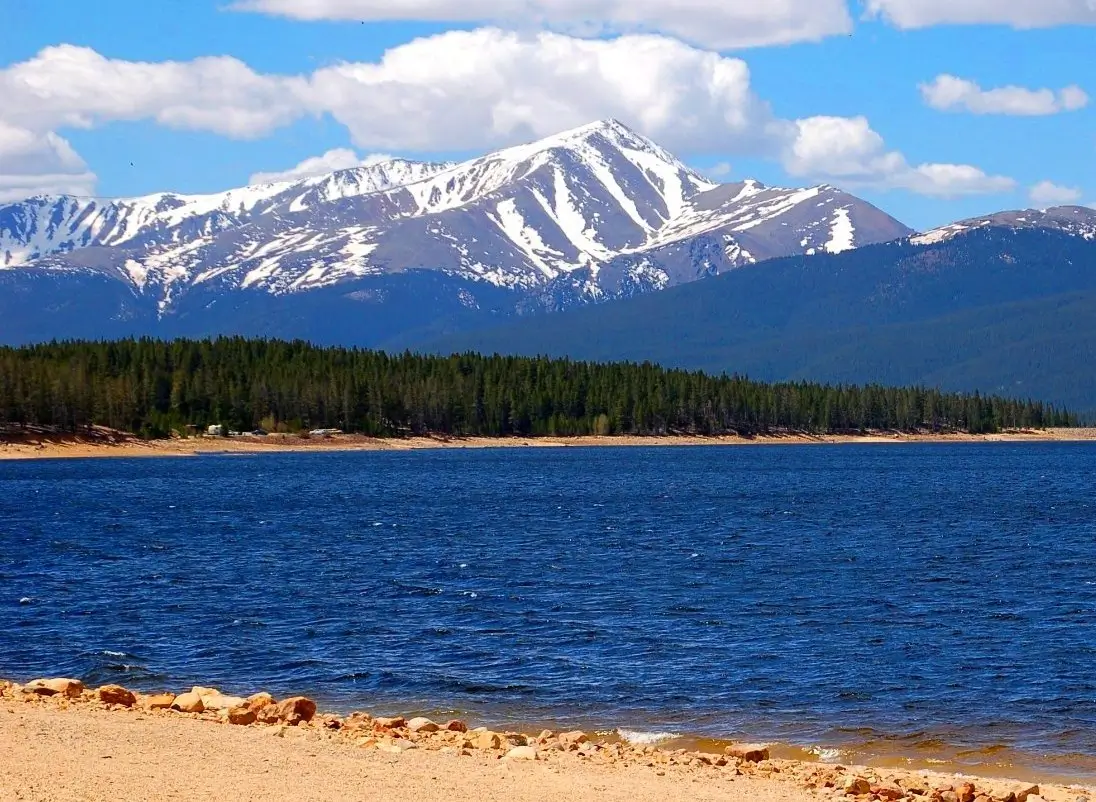
Mount Elbert seen from Turquoise Lake, Photo: Hogs555
Mount Elbert (4,401 m)
The highest peak in the Rocky Mountains and a surprisingly accessible first summit.
Overview
Mount Elbert rises above central Colorado as the tallest peak in the Rockies, yet its standard route is often described as a “walk-up” mountain. The broad slopes and well-defined trail make it one of the most approachable high summits in North America. Despite its size, the climb feels steady and predictable, offering expansive views across the Sawatch Range and a strong sense of accomplishment for first-time mountaineers.
Access / Base Location
The most common starting point is near Twin Lakes, Colorado, where trailheads are easily reached by car. The surrounding area is well developed for outdoor travel, making logistics simple even for first-time visitors to the Rockies.
Easiest Route
The Northeast Ridge route begins on forested trails before opening onto wide alpine slopes above treeline. The path climbs steadily without exposure or scrambling, allowing climbers to focus on pacing and altitude rather than technical movement. The summit plateau is broad and welcoming, with sweeping views in every direction. Descent follows the same clear route.
Best Season & Difficulty
Best Season: Late June to early October, depending on snow conditions.
Difficulty: Easy (Grade T2 / F, Facile).
Duration: 6–8 hours total.
Why It’s Good for Beginners
Mount Elbert teaches the fundamentals of mountaineering: altitude management, long ascents, and weather awareness – all without technical difficulty. It’s an ideal first high summit in North America.
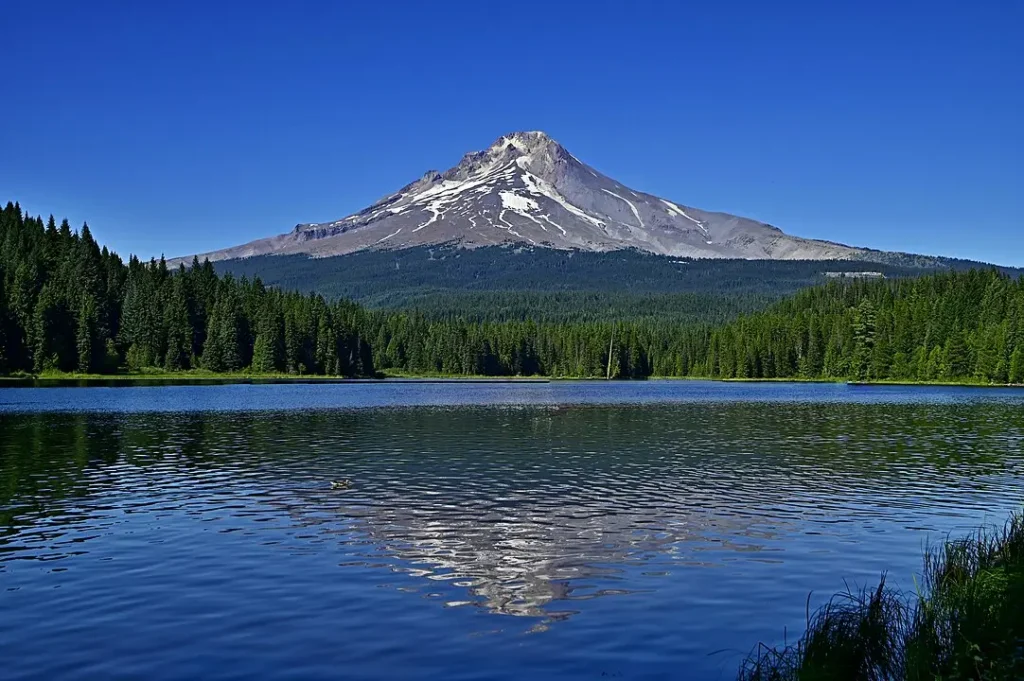
Mount Hood – South Side Route (3,426 m)
A classic introduction to snow travel and alpine technique.
Overview
Mount Hood is Oregon’s most prominent peak and one of the most climbed mountains in the United States. The South Side Route is widely considered a beginner’s mountaineering classic, offering snow slopes, glacier travel awareness, and a true alpine summit – all on a well-established line. While not a hiking peak, it remains approachable with basic mountaineering skills.
Access / Base Location
Most ascents begin from Timberline Lodge, a historic and easily accessible base with parking, facilities, and clear route visibility. This accessibility makes Mount Hood a popular training mountain for first-time climbers.
Easiest Route
The route ascends snowfields and gentle slopes toward the summit crater, passing well-known landmarks such as the Palmer Snowfield and Devil’s Kitchen. While steepness increases near the top, the terrain remains non-technical when conditions are stable. Proper equipment and early starts are essential, but the route itself is straightforward.
Best Season & Difficulty
Season: May to early July, depending on snow conditions.
Difficulty: Easy to Moderate (T2 / F), with snow travel.
Duration: 6–8 hours total.
Why It’s Good for Beginners
Mount Hood introduces essential mountaineering skills -crampons, ice axe use, and snow movement -in a controlled environment. It’s often the first true mountaineering peak for North American climbers.
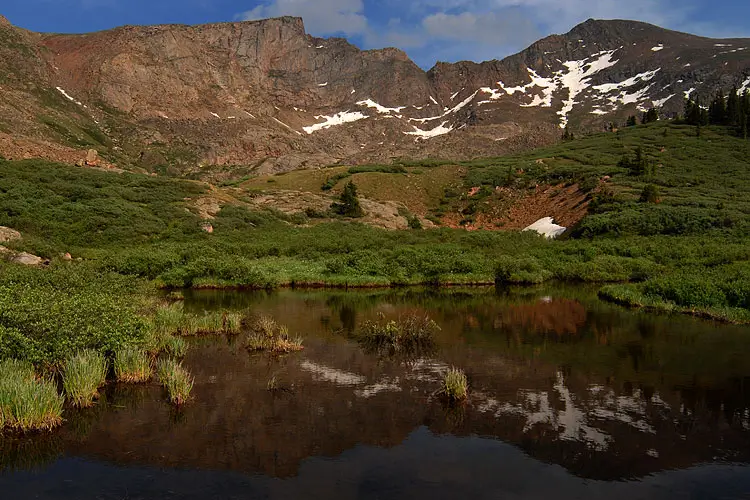
Mt Bierstadt, Photo: Robertbody
Mount Bierstadt (4,287 m)
A gentle Colorado fourteener with classic alpine exposure.
Overview
Mount Bierstadt is one of Colorado’s most popular beginner peaks, known for its rounded summit and accessible trail. Despite its popularity, the mountain delivers a genuine alpine feel, with wide tundra, rocky ridges, and expansive views across the Front Range. It’s often climbed by those new to mountaineering or high-altitude hiking.
Access / Base Location
The trailhead is located at Guanella Pass, which is reachable by paved road during the summer months. This high starting elevation reduces the overall effort and makes the route suitable for beginners.
Easiest Route
The route begins across open alpine tundra before gradually climbing toward the summit ridge. The trail is well-defined and avoids exposure or scrambling. While the hike is steady, it remains comfortable and intuitive throughout, with a clear line to the summit.
Best Season & Difficulty
Season: Late June to September.
Difficulty: Easy (Grade T2 / F, Facile).
Duration: 5–7 hours total.
Why It’s Good for Beginners
Mount Bierstadt offers altitude, open terrain, and mountain weather exposure without technical difficulty. It’s an excellent confidence-building peak for climbers transitioning from hiking to mountaineering.
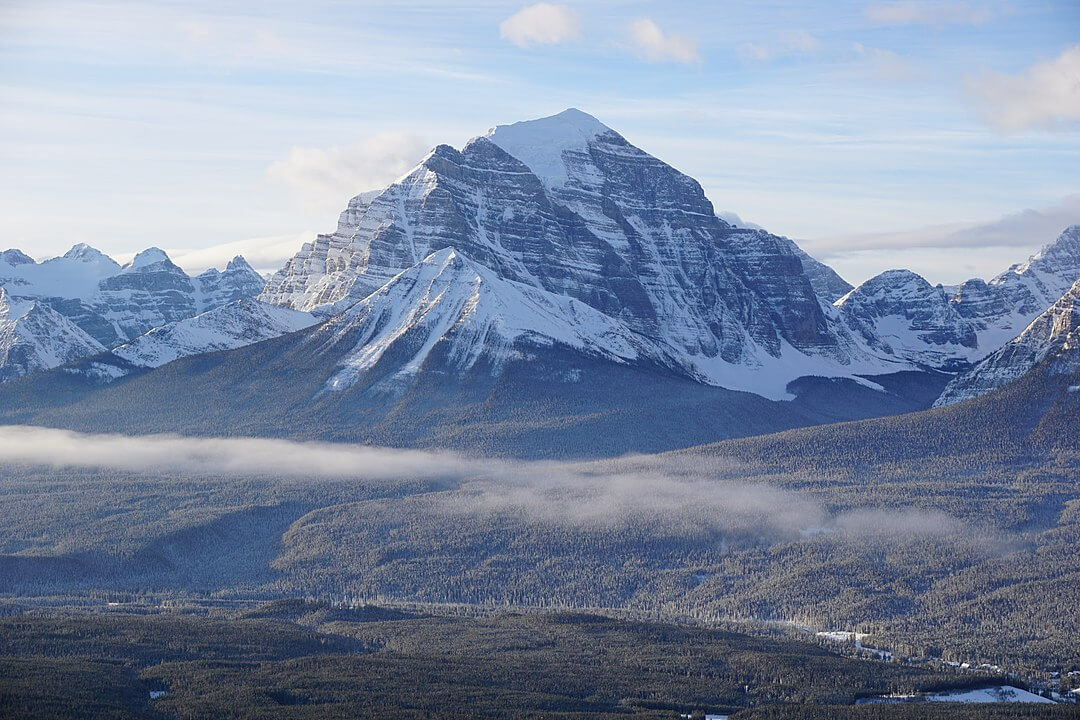
Mount Temple in winter, Photo: Olga Lipovtseva
Mount Temple (3,544 m)
A dramatic Canadian Rockies summit with a non-technical summer route.
Overview
Mount Temple dominates the Lake Louise area in Banff National Park and is one of the most iconic peaks in the Canadian Rockies. While its north face is steep and technical, the standard summer route offers a non-technical path to the summit. The mountain delivers dramatic alpine scenery, steep scree slopes, and a true sense of scale.
Access / Base Location
The ascent starts near Lake Louise, one of Canada’s most accessible mountain hubs. Trails are well maintained, and the area is supported by strong park infrastructure.
Route Summary (Easiest Route)
The route climbs steadily through moraine and scree, following a clear but demanding trail. While steep, the path avoids exposure and technical sections. The summit rewards climbers with views across glaciers, lakes, and the heart of the Canadian Rockies. The descent follows the same line.
Best Season & Difficulty
- Season: July to September.
- Difficulty: Easy to Moderate (T2 / F), due to steepness.
- Duration: 8–10 hours total.
Why It’s Good for Beginners
Mount Temple introduces beginners to steeper alpine terrain and longer summit days while remaining non-technical. It’s a powerful first experience in the Canadian Rockies.
Final
The Rocky Mountains offer one of the most accessible gateways into mountaineering in North America. From walk-up summits like Mount Elbert to snow-covered classics like Mount Hood, the range provides safe, structured opportunities to learn altitude management, pacing, and alpine awareness. These four routes show that mountaineering doesn’t have to start with ropes and exposure – it begins with understanding terrain, weather, and movement in the mountains.

Share this post:



Comments