
How to Start Mountaineering: First Routes in Tatra Mountains
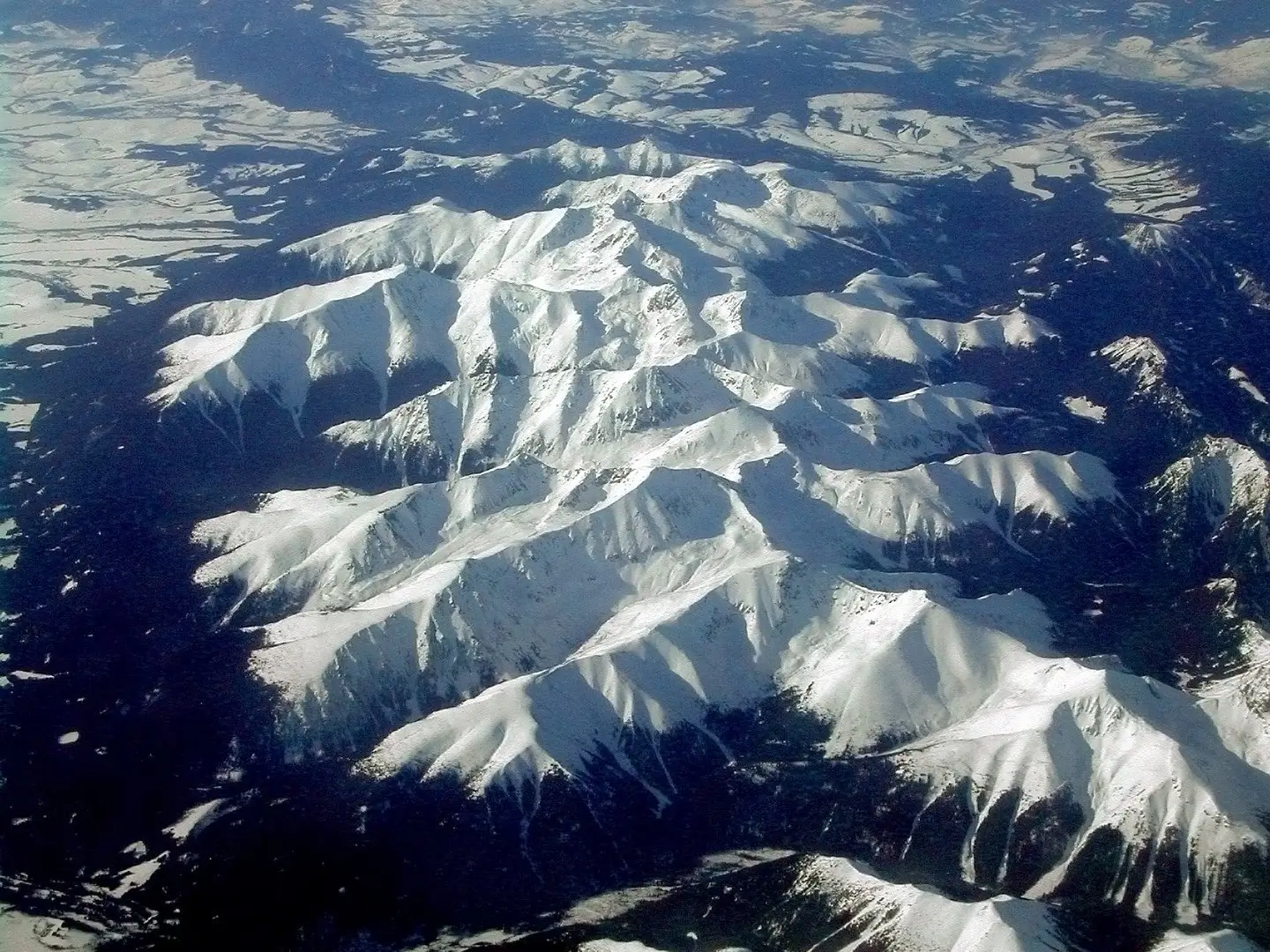
Tatra Mountains, western side in winter. Photo: Piotr J – Own work
Regional Overview
Shared by Poland and Slovakia, the Tatra Mountains are the highest part of the Carpathians and one of Europe’s most compact but dramatic alpine ranges. Their granite ridges, sharp peaks, deep lakes and classic hiking infrastructure make them a welcoming playground for anyone taking their first steps into mountaineering. The region feels wild yet approachable: trails are well marked, mountain huts are frequent, and access from towns like Zakopane or Štrbské Pleso is simple and reliable.
Although the Tatras may be smaller than the Alps or Dolomites, they offer real alpine sensations on a smaller scale – perfect for beginners. In this guide, we explore four of the easiest and most popular introductory peaks: Giewont, Kasprowy Wierch, Rysy, and Świnica (Svinica). Each of them offers a slightly different type of terrain and challenge, giving new climbers a balanced, confidence-building start.
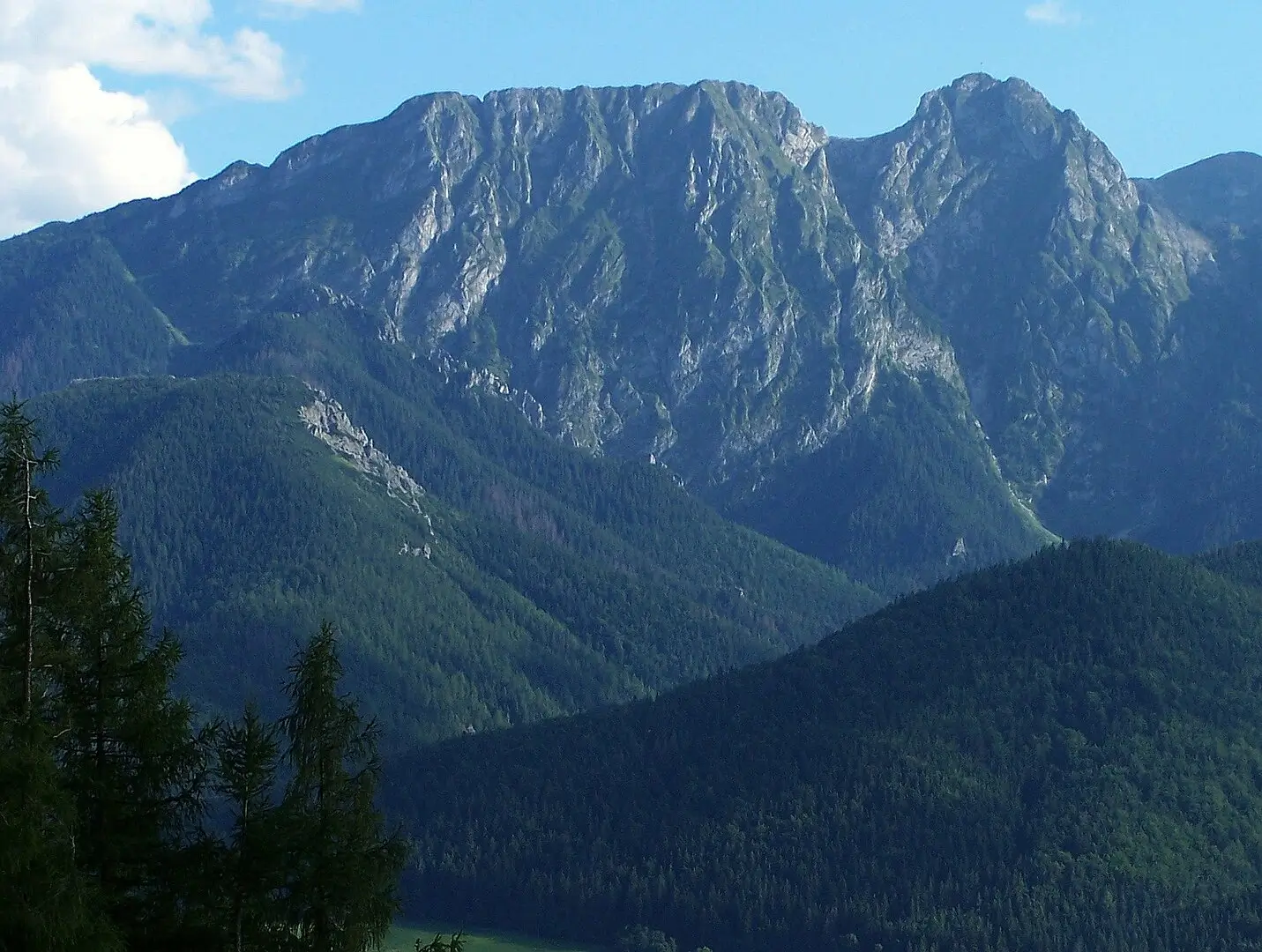
Giewont, Photo: Jerzy Opioła
Giewont (1,895 m)
Poland’s Iconic Peak and a Perfect First Tatra Experience
Overview
Giewont is one of the most symbolic mountains in the Polish Tatras – a proud limestone massif rising directly above Zakopane. Its dramatic silhouette, crowned by a large iron cross, attracts hikers from all over the country. While steep in places, the standard route is approachable, with short sections of chains that give beginners their first taste of easy scrambling. The views over the Podhale region are wide and rewarding, making it a classic “first peak” for many visitors.
Fun fact: Local legends describe Giewont as a sleeping knight who will one day awaken to protect Poland.
Access / Base Location
Most ascents start in Zakopane, one of Poland’s main mountain towns. The trailheads in Kuźnice and the surrounding valleys are all easy to reach on foot or by local transport. The infrastructure is strong, and this accessibility makes Giewont an ideal half-day introduction to the region.
Easiest Route
The classic ascent from Kuźnice begins with a pleasant forest path that climbs gradually toward Kondratowa Valley. From the saddle at Kondracka Przełęcz, the terrain becomes rockier and steeper, and the final stretch to the summit is protected with chains. These sections are short and manageable, offering a safe first encounter with light exposure. The descent follows the same route and remains straightforward throughout the day.
Best Season & Difficulty
Best Season: Late June to early October, when snow-free and stable.
Difficulty: Easy (Grade T2 / F, Facile).
Duration: 1–3 hours total, depending on pace and starting point.
Why It’s Good for Beginners
Giewont introduces newcomers to essential mountain sensations – steeper terrain, chain-protected sections and airy views – while remaining short, clear and accessible. It’s a confidence-building peak that prepares you for bigger Tatra goals.
Kasprowy Wierch (1,987 m)
A gentle high-mountain ridge experience supported by a cable car
Overview
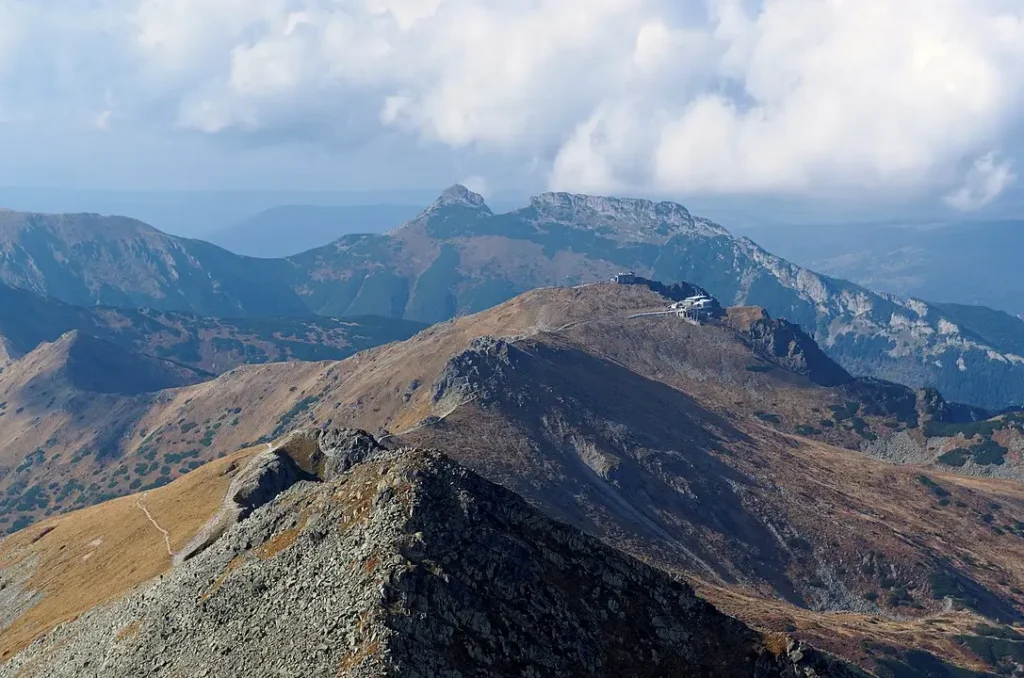
Kasprowy Wierch is one of the most beginner-friendly high points in the Tatras, offering wide ridgelines, open panoramas and the unique advantage of a cable car. Its terrain feels like a real alpine environment without the difficulty normally associated with it, making it an excellent introduction to ridge walking and higher elevation.
Access / Base Location
The route begins in Kuźnice, where the cable car station is located. Many beginners choose to ride up and walk down, or walk part of the way and return by cable car. This flexibility allows safe planning in changing weather and makes the climb suitable even for those taking their first steps in the mountains.
Easiest Route
The easiest version of the route begins with the cable car ride to the summit, followed by a leisurely walk along the border ridge. The panoramic trail offers beautiful perspectives of both Poland and Slovakia without exposure. For climbers who want to hike up, the classic ascent from Kuźnice through Myślenickie Turnie is long but straightforward, with steady gradients and no technical features.
Best Season & Difficulty
Season: Late June to early October.
Difficulty: Easy (Grade T2 / F, Facile).
Duration: 1–3 hours if taking the cable car; longer if hiking from the base.
Why It’s Good for Beginners
Kasprowy Wierch allows beginners to experience high-altitude terrain without the stress of committing to a long ascent. The cable car offers a safety net, while the ridge gives a perfect introduction to elevation, weather changes and panoramic walking.
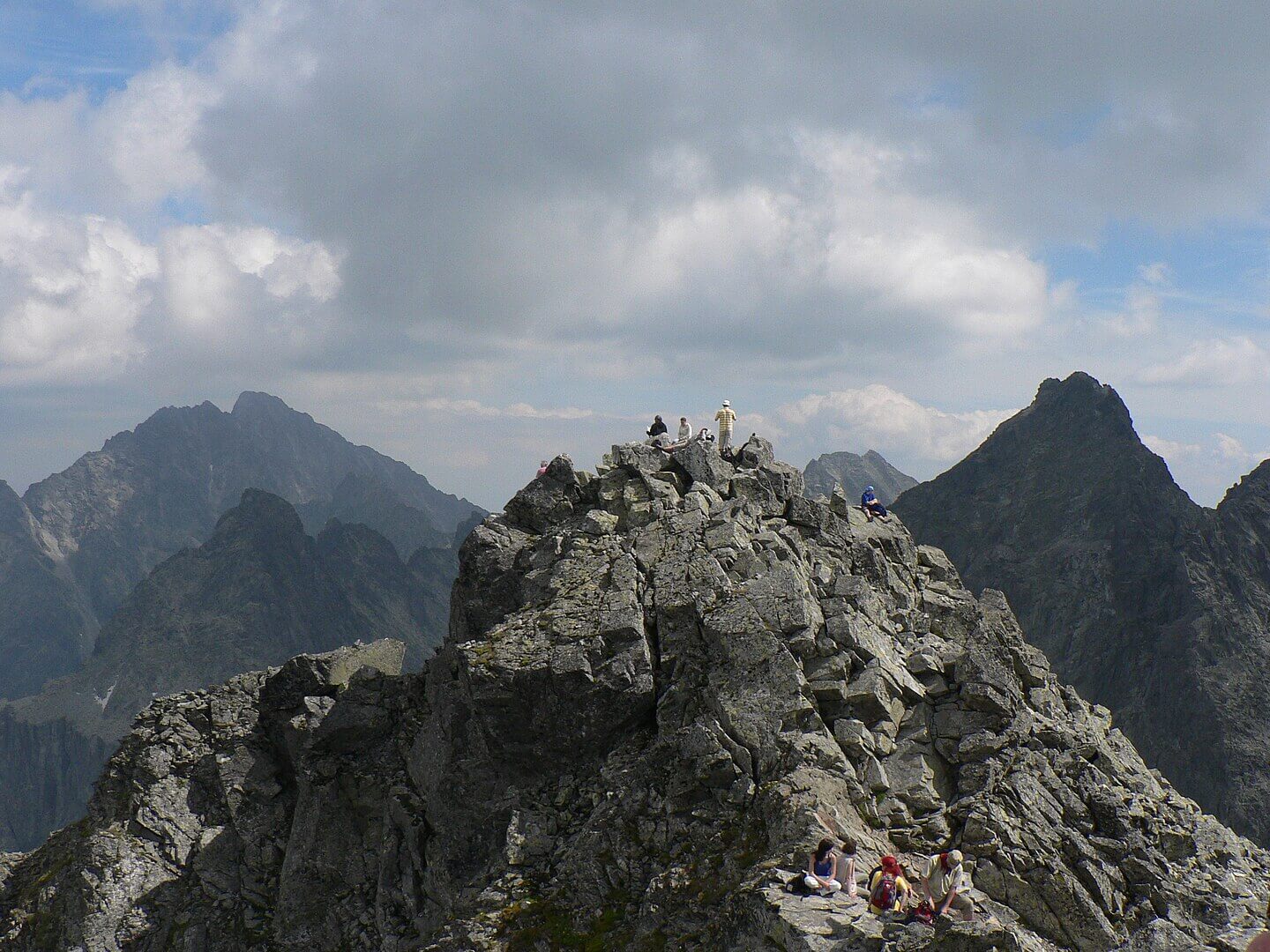
Rysy, Photo: Krzysztof Dudzik-Górnicki (User:ToSter)
Rysy (2,503 m)
The highest point in Poland and an ideal “first big mountain.”
Overview
Rysy stands proudly on the Polish–Slovak border and is one of the most iconic peaks in the Tatras. Although more demanding than the previous mountains, its standard summer routes remain accessible for fit beginners, especially from the Slovak side. The climb is varied and rewarding, with glacial basins, mountain lakes and a memorable summit panorama stretching across the High Tatras.
Access / Base Location
The Slovak approach from Štrbské Pleso is the preferred choice for beginners due to its gentler incline and lower crowds. The route passes by the scenic Popradské Pleso and reaches Chata pod Rysmi, the highest hut in the Tatras, which serves as a convenient rest point before the final ascent.
Easiest Route
From Štrbské Pleso, the trail gradually rises through peaceful valleys before steepening near the hut. The last section uses chains to assist hikers across rockier ground, but these parts are intuitive and not overly exposed. The summit ridge opens dramatically across both sides of the border, offering one of the region’s most rewarding views. The descent follows the same well-marked trail.
Best Season & Difficulty
Season: Late June to early October, ideally July–September for full snow melt.
Difficulty: Easy to Moderate (T2 / F, Facile), depending on fitness and comfort with chains.
Duration: 6–8 hours total from the Slovak side.
Why It’s Good for Beginners
Rysy provides a safe but meaningful challenge: a long day, a structured route, a hut on the way, and a non-technical summit. It’s a perfect introduction to endurance-based mountaineering and a significant confidence boost for new climbers.
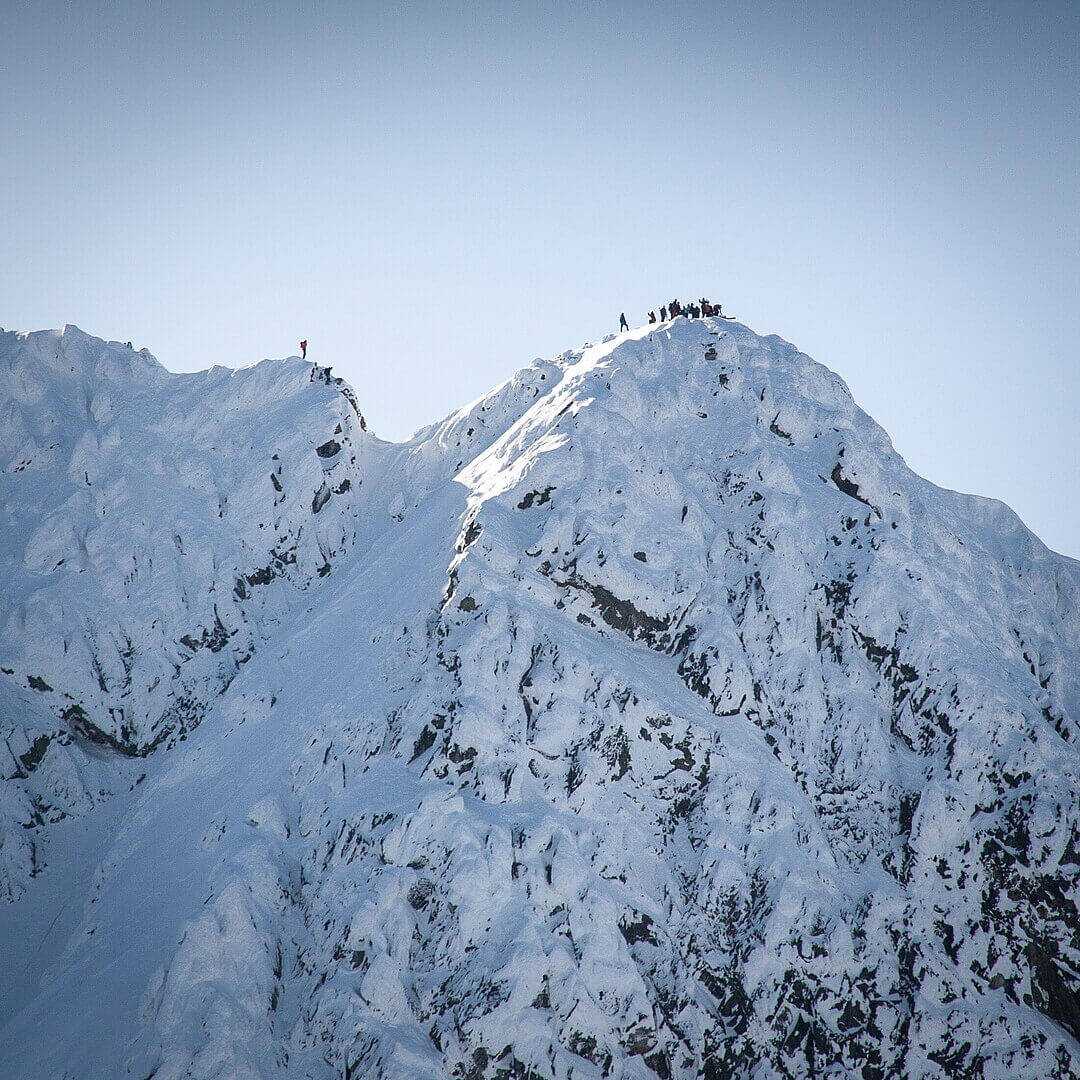
Świnica / Svinica (2,301 m)
A scenic introduction to Tatra basins and light scrambling.
Overview
Świnica (Svinica) rises in the heart of the High Tatras and dominates the surrounding lakes and valleys. Although the summit ridge is technical, beginners can still enjoy its easier Slovak approaches, which lead through beautiful glacial basins without committing to exposed terrain. This makes Świnica an excellent mountain for learning pacing, comfort with rocky paths and moving confidently in classic Tatra scenery.
Access / Base Location
The best starting point is Štrbské Pleso, where trails toward the Skok Waterfall and the surrounding basins begin. This approach is gentler than the Polish routes, offering a safer and more beginner-friendly experience.
Route Summary (Easiest Route)
The path climbs toward the impressive Skok Waterfall before entering the wide glacial basin beneath Świnica. The terrain becomes rockier but stays intuitive, with occasional chains helping across short sections. Depending on the conditions and experience level, beginners may explore the basin, reach the nearby pass or continue slightly higher if the weather is ideal. The landscape remains spectacular throughout the climb.
Best Season & Difficulty
- Season: Late June to early October.
- Difficulty: Easy to Moderate (Grade T2 / F, Facile).
- Duration: 3–6 hours depending on chosen turnaround point.
Why It’s Good for Beginners
Świnica offers a rich introduction to Tatra-style hiking – mountain lakes, rocky basins, light scrambling and high-mountain atmosphere – without entering technical or exposed territory. It’s the perfect mountain to build confidence and experience before progressing to more demanding routes.
Final
The Tatras may be smaller than the Alps or the Dolomites, but they offer everything a beginner mountaineer needs: clear trails, accessible peaks, mountain huts, and a landscape that feels wild without being overwhelming. Each of these four routes – Giewont, Kasprowy Wierch, Rysy, and Świnica – introduces a different skill, whether it’s scrambling, walking airy ridges, pacing a long ascent, or navigating classic Tatra basins. For anyone starting their mountaineering journey in Europe, the Tatras are a perfect training ground: close to nature, rich in alpine character, and welcoming to those who are just beginning to build their confidence among the mountains.

Share this post:



Comments