
How to Start Mountaineering: Tibet Himalaya
The Tibetan side of the Himalaya offers vast landscapes and non-technical peaks where beginners can learn mountaineering through altitude, not difficulty.
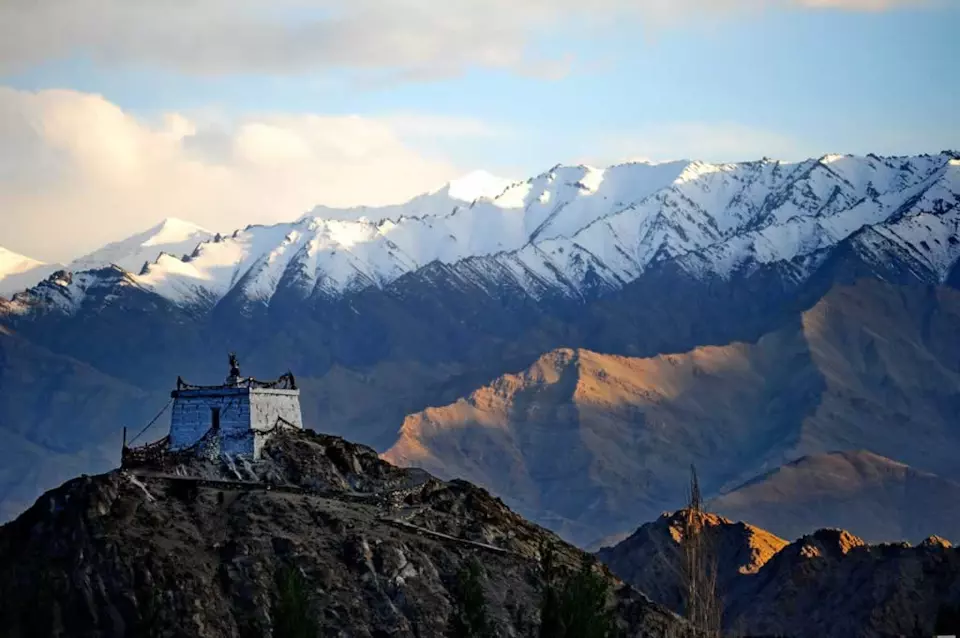
Tibet Himalayas, Photo: vivitravels.com
Regional Overview
The Tibet Himalaya forms the northern face of the greater Himalayan system, stretching across the Tibetan Plateau – one of the highest and most expansive landscapes on Earth. Unlike the steep southern valleys of Nepal, the Tibetan side is characterized by broad valleys, open glaciers, and gradual mountain profiles, which often make certain routes more accessible from a technical standpoint.
Mountaineering in Tibet is defined by altitude rather than difficulty. Even relatively “easy” peaks rise above 6,000 meters, requiring careful acclimatization and logistical planning. At the same time, the terrain often avoids technical climbing, allowing beginners to focus on endurance, glacier travel, and high-altitude adaptation.
This guide focuses on four accessible introductory objectives in the Tibet Himalaya: Mount Kailash (outer kora high points), Nojin Kangsang, Mount Nyainqêntanglha (approach routes), and Cho Oyu (normal route under expedition conditions) – each offering a different perspective on how mountaineering begins on the Tibetan Plateau.
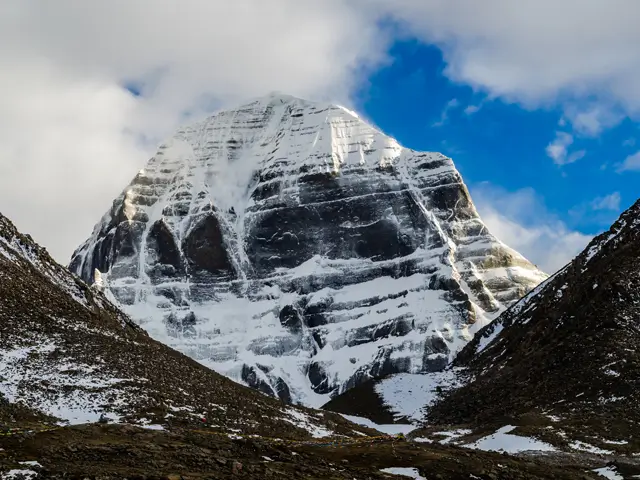
Mount Kailash, by himalayanwonders.com
Mount Kailash Region (5,630 m high point – Dolma La Pass)
A sacred mountain environment where altitude experience begins without technical climbing.
Overview
Mount Kailash is one of the most revered mountains in the world and is not climbed out of respect for its religious significance. However, the surrounding terrain – particularly the famous kora route – offers one of the most accessible ways to experience extreme altitude in the Tibet Himalaya.
Access / Base Location
Access is typically via overland travel across western Tibet, often from Lhasa or through Nepal. The journey itself introduces climbers to the scale and remoteness of the plateau.
Easiest Route
The outer kora (circumambulation route) crosses Dolma La Pass (5,630 m), a physically demanding but non-technical high-altitude pass. The route involves no climbing, but the altitude and exposure provide a serious introduction to Himalayan conditions.
Best Season & Difficulty
Best Season: May to September
Difficulty: Easy (High-Altitude Trek)
Duration: 3-5 days
Why It’s Good for Beginners
This is one of the safest ways to experience extreme altitude before attempting any summit. It teaches pacing, acclimatization, and mental adaptation to high elevation.
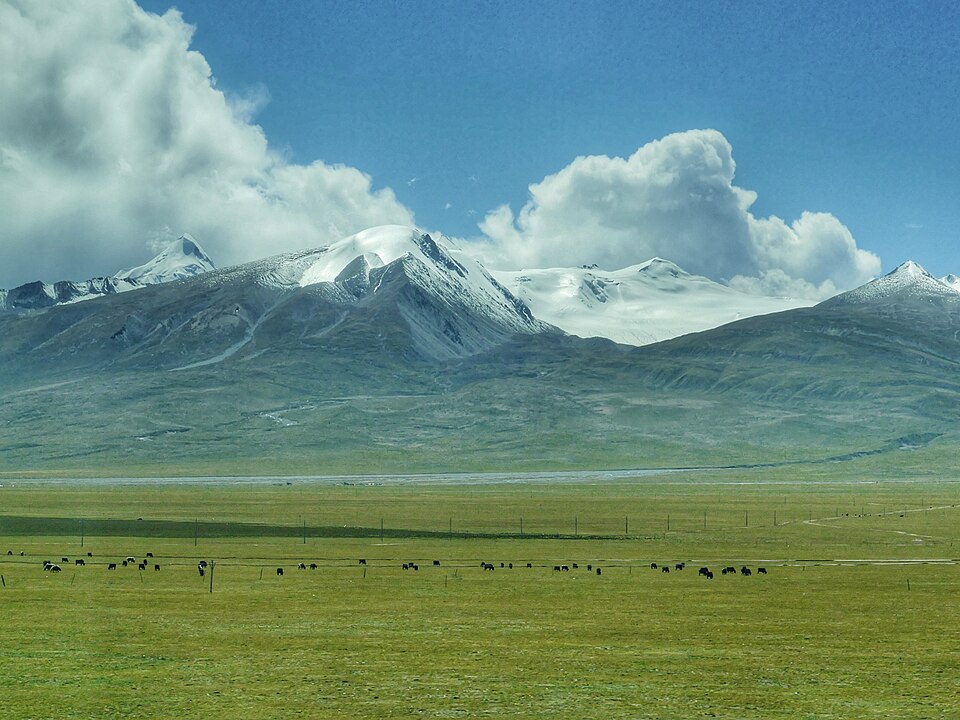
Nyainqêntanglha Peaks (6,000 m class)
A lesser-known range offering non-technical glacier climbs near Lhasa.
Overview
The Nyainqêntanglha Range stretches across central Tibet and includes multiple peaks around 6,000 meters. Many of these mountains remain rarely climbed, but their broad glaciers and moderate slopes make them suitable for beginner expeditions under guidance.
Access / Base Location
The range is relatively accessible from Lhasa, making logistics simpler compared to more remote Himalayan regions. This proximity allows for shorter expeditions with controlled conditions.
Easiest Route
Selected peaks in this range can be climbed via gradual glacier ascents with minimal technical difficulty. Routes vary depending on the chosen summit, but most involve steady snow slopes and basic rope work.
Best Season & Difficulty
Season: May to October
Difficulty: Easy to Moderate (F / PD-)
Duration: 10-16 days
Why It’s Good for Beginners
These peaks offer a true mountaineering experience – glacier travel, camp progression, and summit push – without the technical demands of steeper Himalayan climbs.
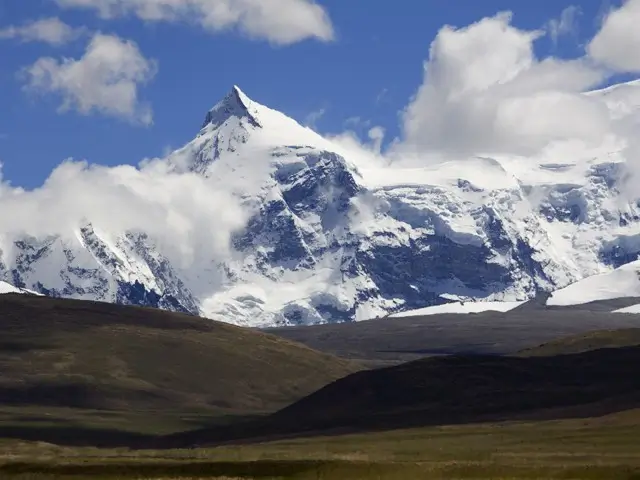
Mount Shishapangma, Photo: himalayanwonders.com
Kangshung Region Training Peaks (5,500-6,200 m)
Remote and quiet peaks on the eastern side of Everest, ideal for skill-building expeditions.
Overview
The Kangshung Face region, on the eastern side of Everest, is one of the least-visited areas of the Himalaya. While the main face is highly technical, the surrounding terrain includes smaller, unnamed or rarely climbed peaks that are used for training and exploratory mountaineering.
Access / Base Location
Access is more complex, requiring travel through eastern Tibet and a multi-day approach trek. This remoteness is part of the learning experience.
Easiest Route
Beginner-friendly objectives in this area focus on smaller peaks with gradual snow slopes and limited technical exposure, allowing climbers to practice expedition skills in a real Himalayan environment.
Best Season & Difficulty
Season: April to May, October to November
Difficulty: Moderate (PD+)
Duration: 14-20 days
Why It’s Good for Beginners
This region introduces expedition-style mountaineering in a quieter setting, helping climbers develop independence, navigation skills, and confidence.
Shishapangma Base Camp Area (Training & Acclimatization Peaks)
A classic Tibetan expedition zone used to prepare for higher Himalayan climbs.
Overview
Mount Shishapangma is the only 8,000-meter peak located entirely within Tibet. While the summit itself is not a beginner objective, the base camp and surrounding terrain provide an ideal environment for learning high-altitude mountaineering.
Access / Base Location
One of the key advantages is the ability to drive directly to base camp, making logistics simpler than in many other Himalayan regions.
Easiest Route
The surrounding area includes accessible glacier terrain and smaller peaks used for acclimatization and training. Climbers can practice rope work, crampon techniques, and camp movement without committing to a major summit.
Best Season & Difficulty
Season: April to May, September to October
Difficulty: Easy to Moderate (Training Terrain)
Duration: 7-14 days including trek
Why It’s Good for Beginners
This is one of the best environments in the Himalaya to learn expedition basics in a controlled setting before attempting more serious climbs.
Final
The Tibet Himalaya offers a different kind of beginning. Here, mountaineering is less about steep climbing and more about understanding altitude, scale, and patience. Wide glaciers, long approaches, and remote landscapes create an environment where beginners can focus on the fundamentals: movement, acclimatization, and decision-making.
Starting here does not mean chasing summits immediately. It means learning how to exist in high mountains – a foundation that prepares climbers for more technical objectives across the Himalaya and beyond.

Share this post:



Comments
1 Comments
I have been browsing online more than 2 hours today, yet I never found any
interesting article like yours. It is pretty worth enough for me.
In my opinion, if all site owners and bloggers made good content as you did, the net will be a lot
more useful than ever before.