
What Climbers Don’t Say About Death on Everest
High on Mount Everest, above 8,000 meters, the human body enters a state it was never designed to survive.
The air holds only a fraction of the oxygen found at sea level. Every step feels heavier. Thoughts slow down. The body begins to break itself apart, unable to maintain basic functions.
Climbers call this place the Death Zone.
It is here that one of the most difficult truths of Everest exists – not everyone who climbs the mountain comes back down.
And for those who don’t, the story does not end in the way most people expect.
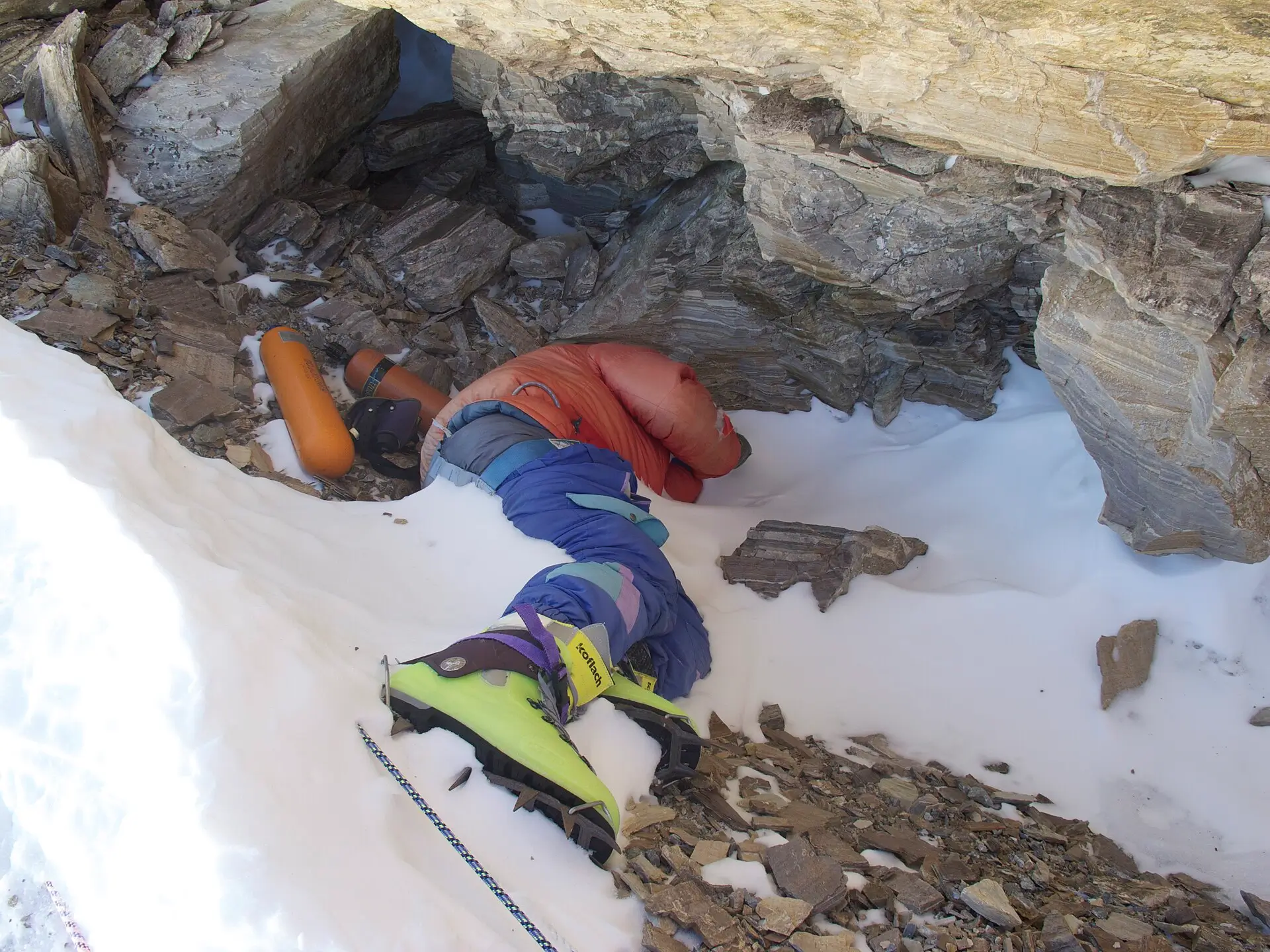
‘Green Boots’ on Everest taken May 2010, Photo: Wikipedia
The Death Zone: Where Survival Has Limits
Above 8,000 meters, the human body cannot acclimatize. No matter how strong or experienced a climber is, time becomes the defining factor.
The longer someone remains at this altitude:
- oxygen levels in the blood drop dangerously
- brain function deteriorates
- decision-making becomes impaired
- the risk of fatal conditions increases rapidly
These include high-altitude cerebral edema (HACE) and high-altitude pulmonary edema (HAPE), both of which can become deadly within hours.
Even with supplemental oxygen, climbers are operating at the edge of survival.
In this environment, every action must be calculated. Every extra movement costs energy the body may not have.
Why Bodies Remain on Everest
The idea that bodies are “left behind” is often misunderstood.
It is not neglect.
It is reality.
At extreme altitude, moving even your own body is difficult. Moving another – especially one that may weigh over 100 kilograms with equipment – becomes exponentially harder.
A recovery operation requires:
- multiple highly experienced climbers
- additional oxygen supplies
- fixed rope systems
- stable weather conditions
Even under ideal circumstances, the process can take hours or days.
And conditions on Everest are rarely ideal.
Strong winds, sudden storms, and extreme cold can turn a recovery mission into a life-threatening situation for everyone involved.
Because of this, climbers and expedition leaders must make a critical decision:
Is it possible to recover the body without risking more lives?
In many cases, the answer is no.
What Happens to the Body Over Time
One of the most widely asked questions is: how long do bodies remain on Everest?
The answer is unlike anything at lower altitudes.
The environment on Everest acts as a natural preservation system.
At extreme altitude:
- temperatures remain well below freezing
- humidity is extremely low
- oxygen levels are insufficient for typical decomposition
As a result, the process of decay slows dramatically.
Bodies can remain intact for decades.
Clothing, equipment, and even physical features may still be recognizable many years later. In some cases, remains have been visible for over 20 or 30 years, depending on their location.
However, Everest is not static.
Glaciers move. Snow accumulates. Winds shift.
Bodies may be buried for years and then reappear. Others may be carried by glacial movement to lower altitudes over time.
Why Recovery Is So Dangerous
Recovering a body from Everest is one of the most difficult tasks in mountaineering.
Unlike rescue operations – where speed is critical – recovery missions deal with additional weight, time, and complexity.
To move a body, teams often need to:
- secure it with ropes
- lower it down steep, technical terrain
- navigate crevasses and icefalls
- manage their own oxygen levels at extreme altitude
Even highly trained Sherpa teams face serious risks during these operations.
There have been instances where recovery missions themselves have led to injuries or fatalities.
For this reason, such efforts are rare – especially above the Death Zone.
How Much Does It Cost to Bring a Body Down?
Recovery operations on Everest are not only dangerous – they are also expensive.
Costs can range from tens of thousands to over $100,000, depending on:
- the location of the body
- altitude
- logistical complexity
- number of people involved
In most cases, families must request and fund these operations.
This creates another difficult reality: not all recoveries are financially possible.
Are Bodies Ever Removed from Everest?
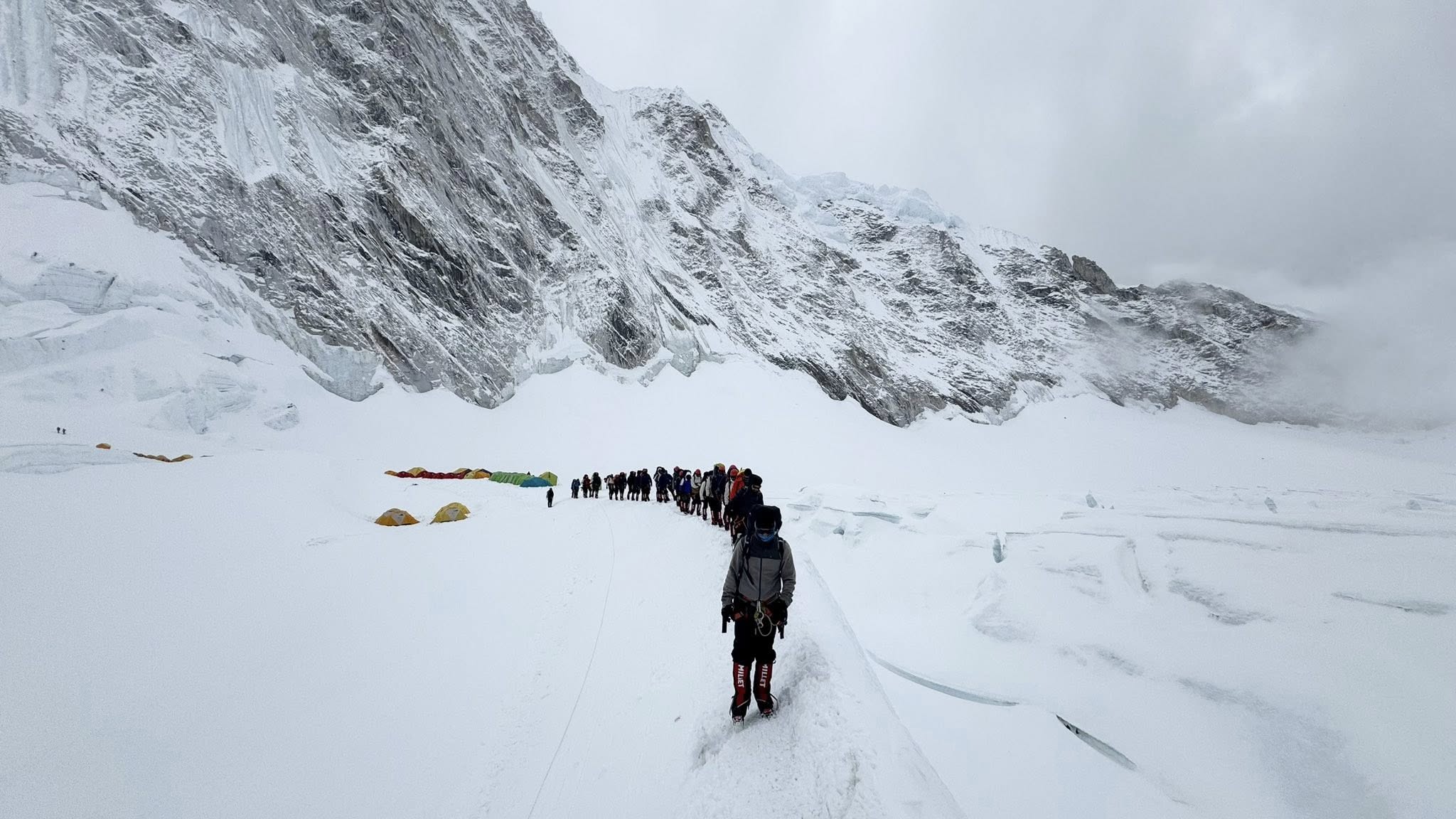
Yes – but usually from lower sections of the mountain.
In recent years, organized clean-up campaigns have focused on:
- removing waste
- retrieving bodies from accessible areas
- improving environmental conditions
These efforts have had some success, particularly around Base Camp and lower camps.
However, above 8,000 meters, recoveries remain extremely rare.
The risk simply outweighs the possibility.
Do Climbers See Bodies on Everest?
This is one of the most uncomfortable, yet frequently asked questions.
The answer is: sometimes, yes.
Some bodies lie near established routes, especially in areas where climbers rest or pass frequently.
However, many are not visible:
- some are buried under snow and ice
- others are located away from main paths
- conditions can change their visibility over time
For climbers, encountering remains can be a deeply emotional experience.
It serves as a powerful reminder of the risks – and the consequences – of high-altitude climbing.
In recent years, there has been a growing emphasis on respect, with climbers avoiding photography or public discussion of identifiable individuals.
Why This Reality Is Unlikely to Change
Despite advances in gear, forecasting, and expedition logistics, Everest remains an extreme environment where human control is limited.
The Death Zone cannot be made safe.
Technology can reduce risk, but it cannot eliminate it.
As long as climbers continue to attempt the summit, the same conditions will exist:
- limited oxygen
- extreme cold
- unpredictable weather
- physical exhaustion
And with them, the same difficult decisions.
More Than a Statistic
It is easy to reduce Everest to numbers – summits, success rates, fatalities.
But behind every statistic is a person.
Someone who trained, prepared, and set out to reach the highest point on Earth.
The reality of bodies remaining on Everest is not just about the mountain.
It is about the limits of the human body, the risks of extreme environments, and the choices made in moments where survival is not guaranteed.
Mount Everest represents ambition, challenge, and achievement.
But it also represents something else:
Limits.
At extreme altitude, not everything is possible.
Not every goal can be completed.
And not every story ends with a descent.
Because on Everest, the summit is never the final step.
Coming back down is.

Share this post:



Comments